
@holdengraber @Samantharhill Benjamin also foresaw the ‘messianic eclipse’ bound within such catastrophic permanency ending in the game-ending 'blast' of a "tempieternal explosion” (Panikkar); a sudden, 'messianic arrest' yoking the architecture of redemptive time to everyday, temporal, political reality.
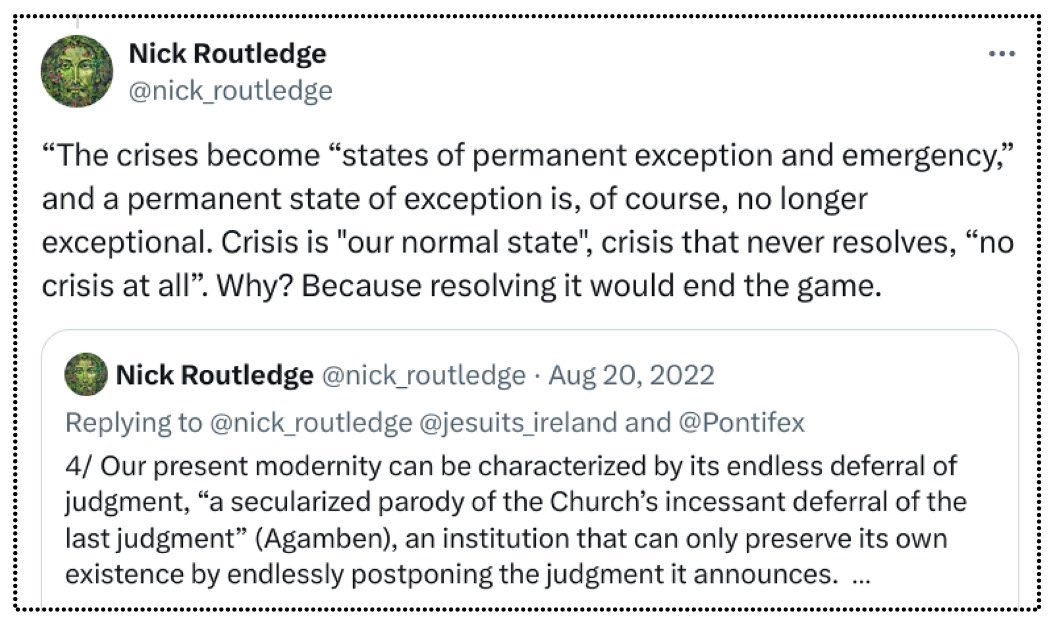
Image description
Original X alt text
Copy of tweet and quote tweet here: “The crises become “states of permanent exception and emergency,” and a permanent state of exception is, of course, no longer exceptional. Crisis is "our normal state", crisis that never resolves, “no crisis at all”. Why? Because resolving it would end the game. 4/ Our present modernity can be characterized by its endless deferral of judgment, “a secularized parody of the Church’s incessant deferral of the last judgment” (Agamben), an institution that can only preserve its own existence by endlessly postponing the judgment it announces.
@pauljpastor Panikkar and Guénon claim temporality itself constitutes secular modernity's deepest, ultimate corruption of Being. Put another way, tempieternity is the mercy of the Messiah. Moltmann: "The Kingdom does not come out of the future into the present. It comes from heaven to earth."
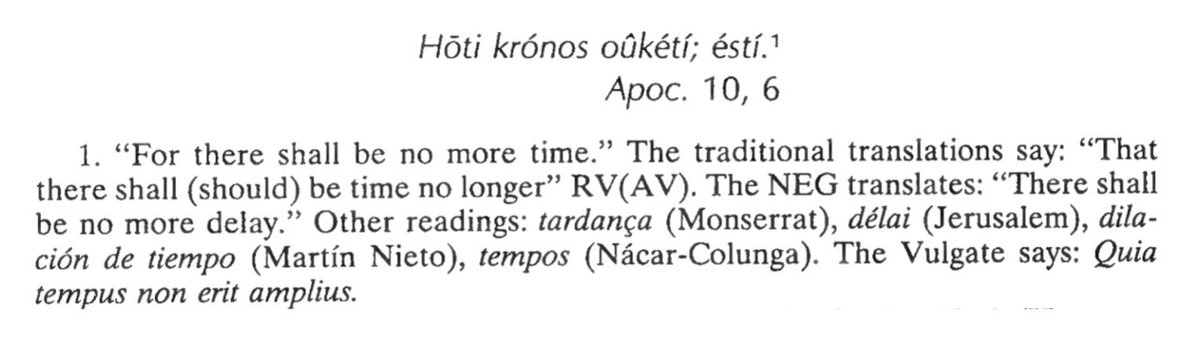
Image description
Original X alt text
Hóti krónos oὐkéti; ésti. Apoc. 10, 6 1. “For there shall be no more time.” The traditional translations say: “That there shall (should) be time no longer” RV(AV). The NEG translates: “There shall be no more delay.” Other readings: tardança (Monserrat), délai (Jerusalem), dilación de tiempo (Martín Nieto), tempos (Nácar-Colunga). The Vulgate says: Quia tempus non erit amplius. From: The Cosmotheandric Experience: Emerging Religious Consciousness (1993), Raimon Panikkar Alemany