
11/ To recognize this moment is not a triumph—it is a wound. A grief born of knowing the Kingdom is here, yet remains unseen, unwelcome, unreceived. This is not a call to abstraction. It is a summons to participation —in what we have long postponed, but can no longer outrun.
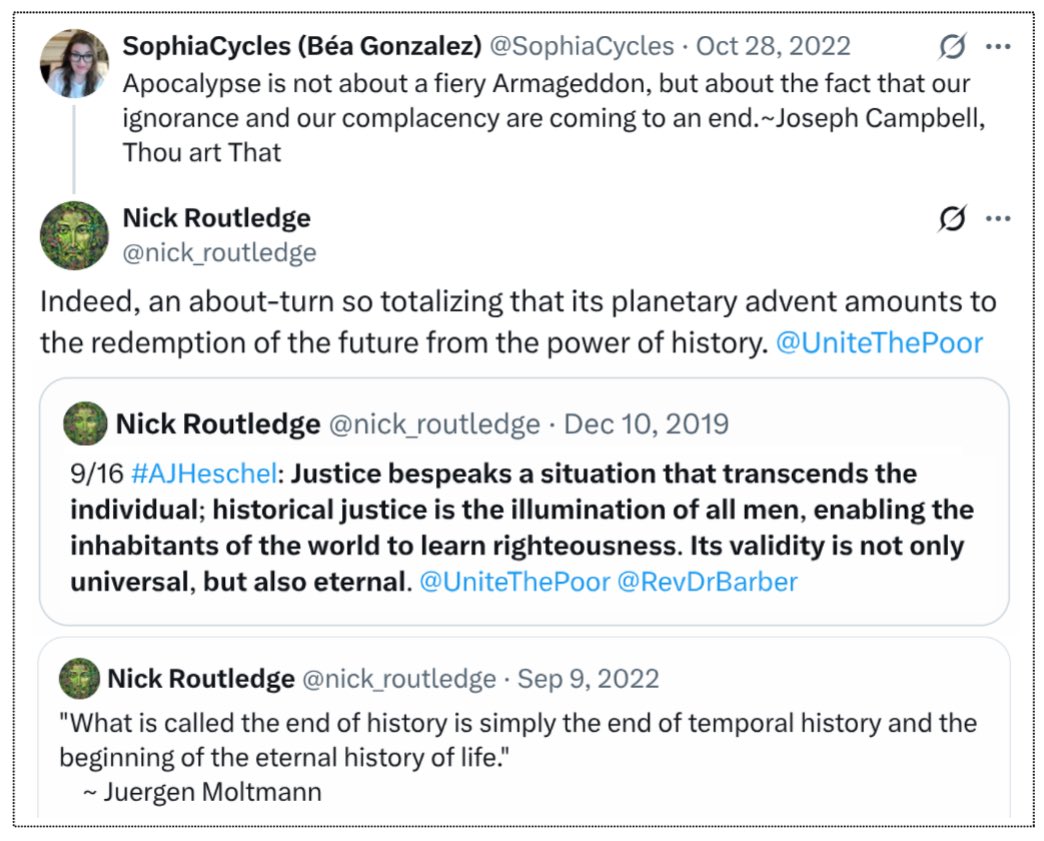
Image description
Original X alt text
Copy of thread here: Apocalypse is not about a fiery Armageddon, but about the fact that our ignorance and our complacency are coming to an end.~Joseph Campbell, Thou art That Indeed, an about-turn so totalizing that its planetary advent amounts to the redemption of the future from the power of history. @UniteThePoor Image of tweet: 9/16 #AJHeschel: Justice bespeaks a situation that transcends the individual; historical justice is the illumination of all men, enabling the inhabitants of the world to learn righteousness. Its validity is not only universal, but also eternal. @UniteThePoor @RevDrBarber "What is called the end of history is simply the end of temporal history and the beginning of the eternal history of life." ~ Juergen Moltmann
@CACRadicalGrace @RichardRohrOFM "God is finally and fully on the side of justice and truth. History does have a direction, meaning, and purpose. God is more fundamental than evil. Resurrection will have the final word, which is the very promise of the Jesus event. The eternal wind of the Spirit is with us."
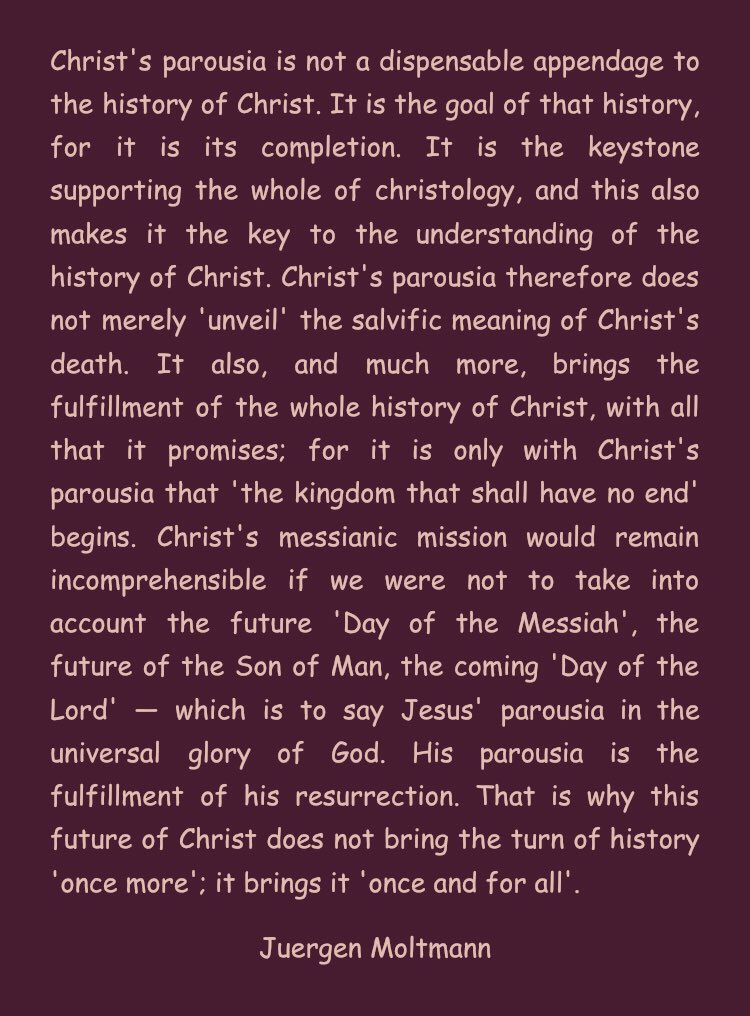
Image description
Original X alt text
Christ's parousia is not a dispensable appendage to the history of Christ. It is the goal of that history, for it is its completion. It is the keystone supporting the whole of christology, and this also makes it the key to the understanding of the history of Christ. Christ's parousia therefore does not merely 'unveil' the salvific meaning of Christ's death. It also, and much more, brings the fulfillment of the whole history of Christ, with all that it promises; for it is only with Christ's parousia that 'the kingdom that shall have no end' begins. Christ's messianic mission would remain incomprehensible if we were not to take into account the future 'Day of the Messiah', the future of the Son of Man, the coming 'Day of the Lord' — which is to say Jesus' parousia in the universal glory of God. His parousia is the fulfillment of his resurrection. That is why this future of Christ does not bring the turn of history 'once more'; it brings it 'once and for all'. Juergen Moltmann