
@lukeburgis 1/3 Here, Judeo-Christian messianisms corroborate, compliment and reinforce one another. We should hardly be surprised: history is one, after all, and ours is an integral, planetary narrative. How, then, does the shape and character of a bifurcation point define His arrival?
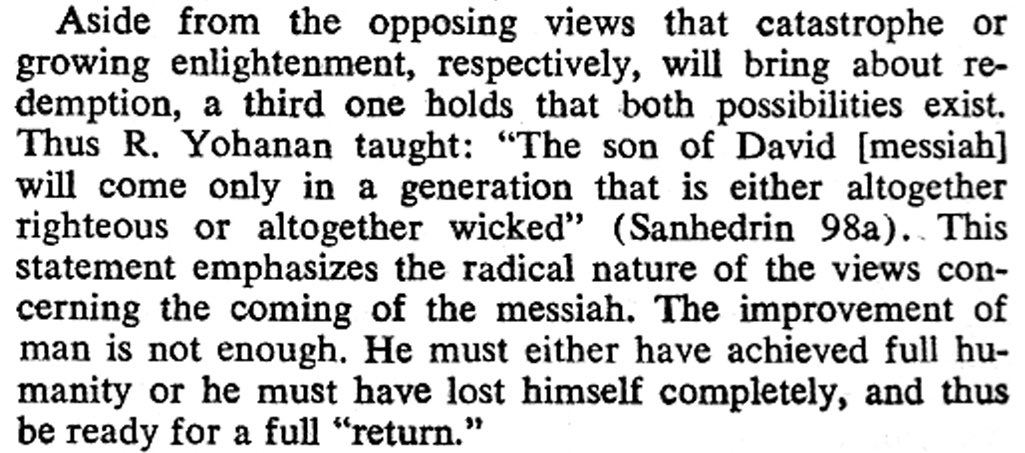
Image description
Original X alt text
Aside from the opposing views that catastrophe or growing enlightenment, respectively, will bring about re- demption, a third one holds that both possibilities exist. Thus R. Yohanan taught: "The son of David [messiah] will come only in a generation that is either altogether righteous or altogether wicked" (Sanhedrin 98a). This statement emphasizes the radical nature of the views concerning the coming of the messiah. The improvement of man is not enough. He must either have achieved full humanity or he must have lost himself completely, and thus be ready for a full "return." - Page 113, You Shall Be As Gods, Erich Fromm
@RDGStout Thank you, yes. And in that light, given that we are precisely the causal ethno-religio-centricity responsible for originating and maintaining the character and catastrophe that is contemporary Palestine, is it any wonder the burden of peace in the Holy Land is ours to bear, too?
View this post’s context →