
@seenunseenmag @profntwright 7/ We are not outside creation looking in. We _are_ creation. Not all of creation, of course. Not its source. Not creation’s lord in any absolute sense. But we are matter called into relation, earth enlivened by breath, dust-bearing image summoned into praise and responsibility.
@HaddenTurner @affinitytalks 16/ Which is why faithful earthcare is redeemed creatureliness in practice. Not symbolically. Literally. Bodies need food. Soil needs tending. Animals need sheltering. The Kingdom doesn’t arrive despite these facts—it arrives through faithfulness to them.
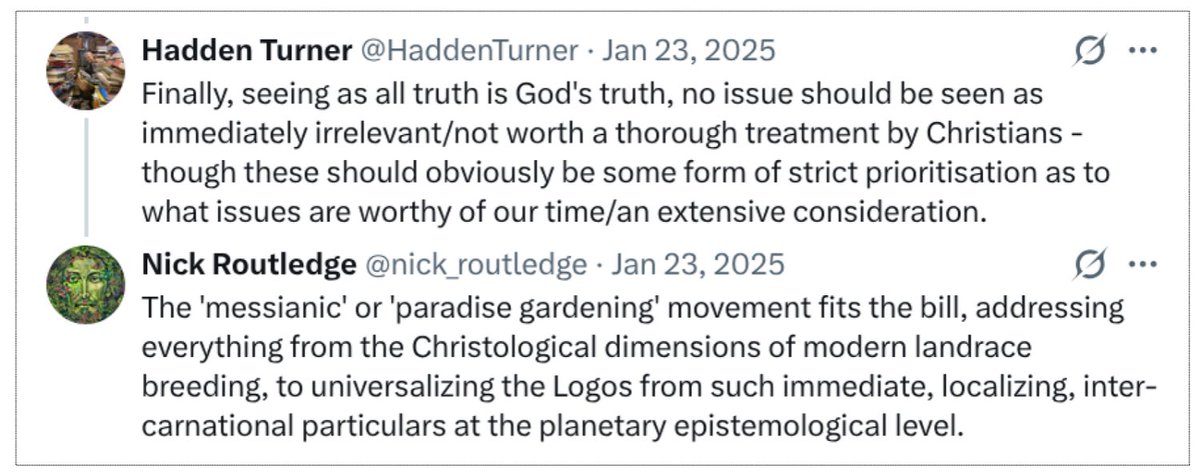
Image description
Original X alt text
Copy of tweet thread: Finally, seeing as all truth is God's truth, no issue should be seen as immediately irrelevant/not worth a thorough treatment by Christians - though these should obviously be some form of strict prioritisation as to what issues are worthy of our time/an extensive consideration.@nick_routledge The 'messianic' or 'paradise gardening' movement fits the bill, addressing everything from the Christological dimensions of modern landrace breeding, to universalizing the Logos from such immediate, localizing, inter-carnational particulars at the planetary epistemological level.