
@nybooks 4/ Pressure applied through policy, economy, popular consent or warfare cannot adequately contest a system deriving its authority from the Hidden Imam’s absence. External force can act on the regime’s material structures, but does not directly engage this fundamental register.
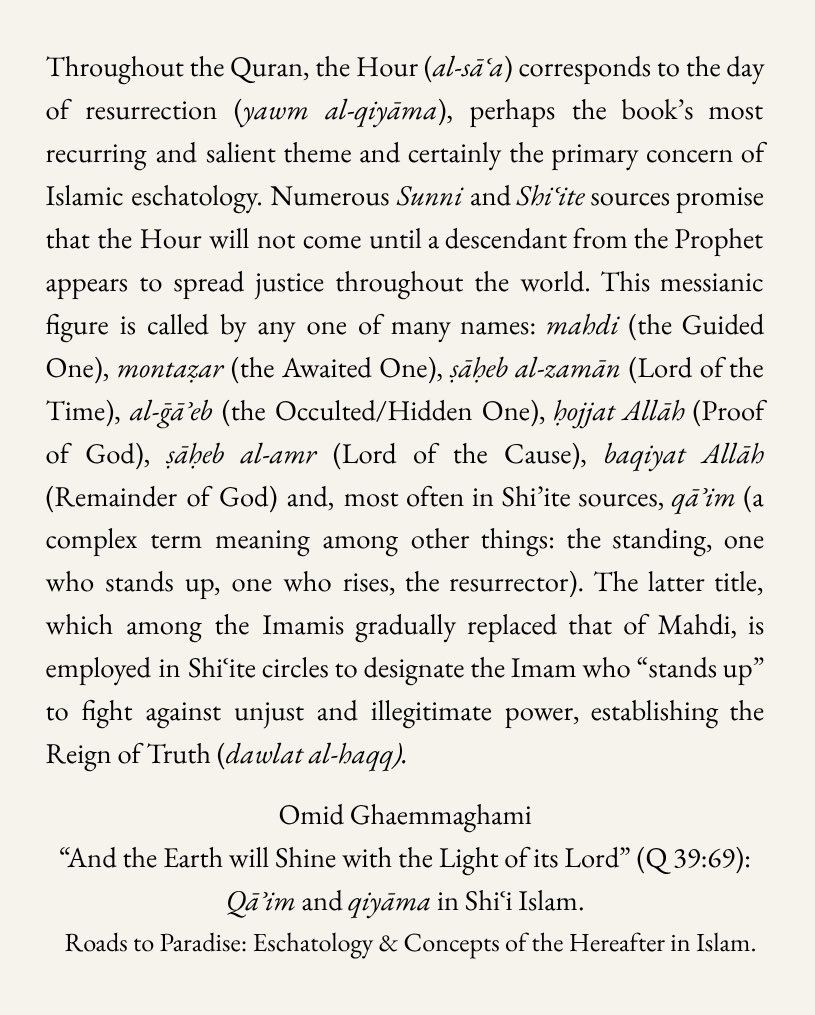
Image description
Extended description
Text image attached to tweet here: Throughout the Quran, the Hour (al-sāʿa) corresponds to the day of resurrection (yawm al-qiyāma), perhaps the book’s most recurring and salient theme and certainly the primary concern of Islamic eschatology. Numerous Sunni and Shiʿite sources promise that the Hour will not come until a descendant from the Prophet appears to spread justice throughout the world. This messianic figure is called by any one of many names: mahdi (the Guided One), montaẓar (the Awaited One), ṣāḥeb al-zamān (Lord of the Time), al-ḡāʾeb (the Occulted/Hidden One), ḥojjat Allāh (Proof of God), ṣāḥeb al-amr (Lord of the Cause), baqiyat Allāh (Remainder of God) and, most often in Shi’ite sources, qāʾim (a complex term meaning among other things: the standing, one who stands up, one who rises, the resurrector). The latter title, which among the Imamis gradually replaced that of Mahdi, is employed in Shiʿite circles to designate the Imam who “stands up” to fight against unjust and illegitimate power, establishing the Reign of Truth (dawlat al-haqq). Omid Ghaemmaghami “And the Earth will Shine with the Light of its Lord” (Q 39:69): Qāʾim and qiyāma in Shiʿi Islam. Roads to Paradise: Eschatology & Concepts of the Hereafter in Islam. []
Open original document