
1/22 The Day After. Religion's highest temptation is to become religion—a stable framework for watching salvation rather than entering it. Hence the terrifying mercy of apocalyptic disclosure's fourth-wall break: the apocalypse is not simply what we see; it is what happens to us.
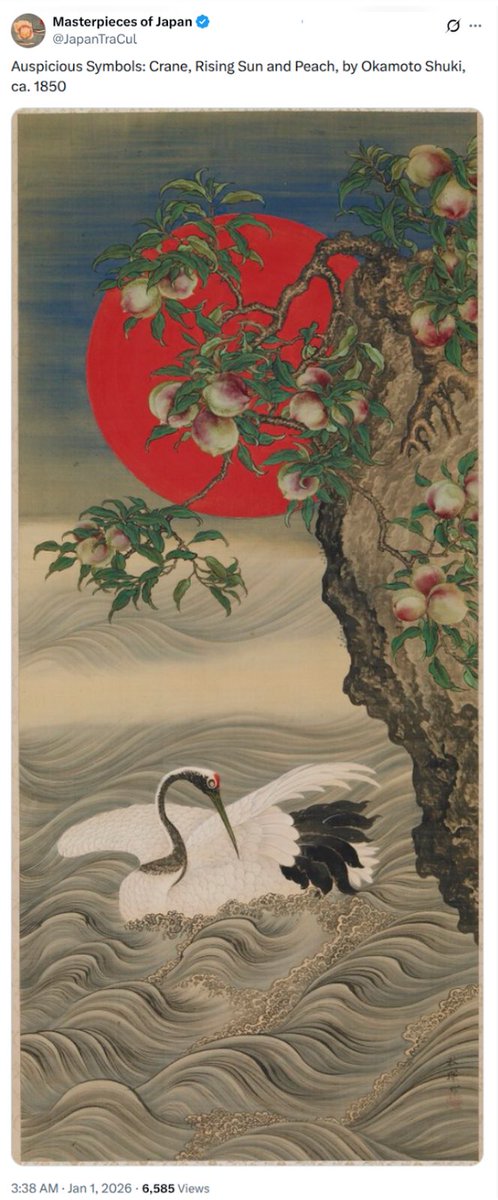
Image description
Original X alt text
Masterpieces of Japan Auspicious Symbols: Crane, Rising Sun and Peach, by Okamoto Shuki, ca. 1850 3.38 a.m. Jan 1, 2026
@tenshi_anna 2/ ...a present bent by its teleological horizon, the moment when the hidden God shows itself, the katechon-to-eschaton crossover, the eschatonic flashpoint, Grace as the Real becoming obvious, the Hour of Unveiling, the Cloud Event as eschatological proviso and disclosure…
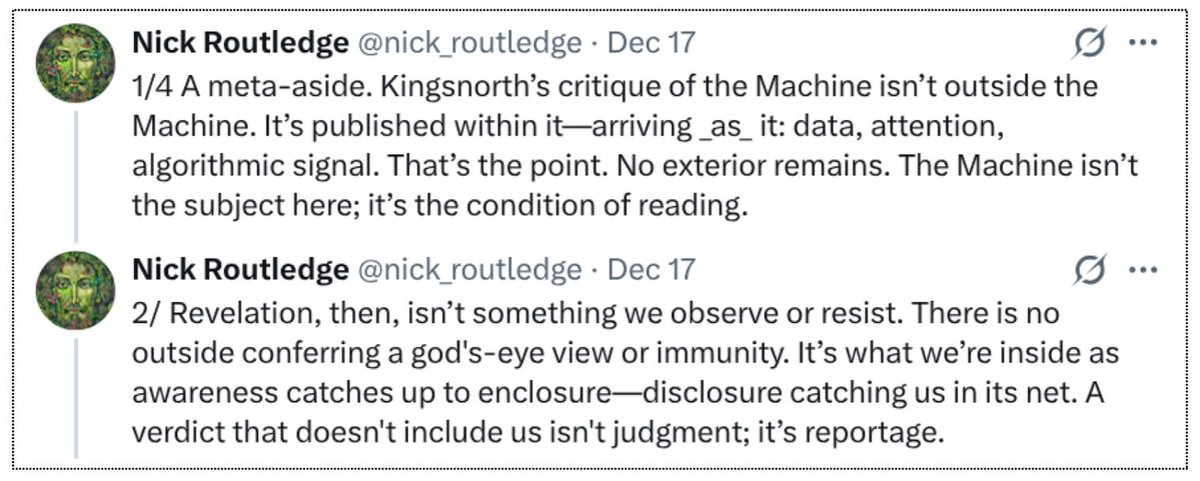
Image description
Original X alt text
@nick_routledge· 1/4 A meta-aside. Kingsnorth’s critique of the Machine isn’t outside the Machine. It’s published within it—arriving _as_ it: data, attention, algorithmic signal. That’s the point. No exterior remains. The Machine isn’t the subject here; it’s the condition of reading. 2/ Revelation, then, isn’t something we observe or resist. There is no outside conferring a god's-eye view or immunity. It’s what we’re inside as awareness catches up to enclosure—disclosure catching us in its net. A verdict that doesn't include us isn't judgment; it’s reportage.