
@tenshi_anna 3/ Patriarchy succumbs not to rival doctrine but to existential incoherence. Across continents, cultures and eras, the messianic arrives as the same lived realignment: an exhausted moral ecology giving way to life-equalizing reality re-balanced between human, earth, and future.
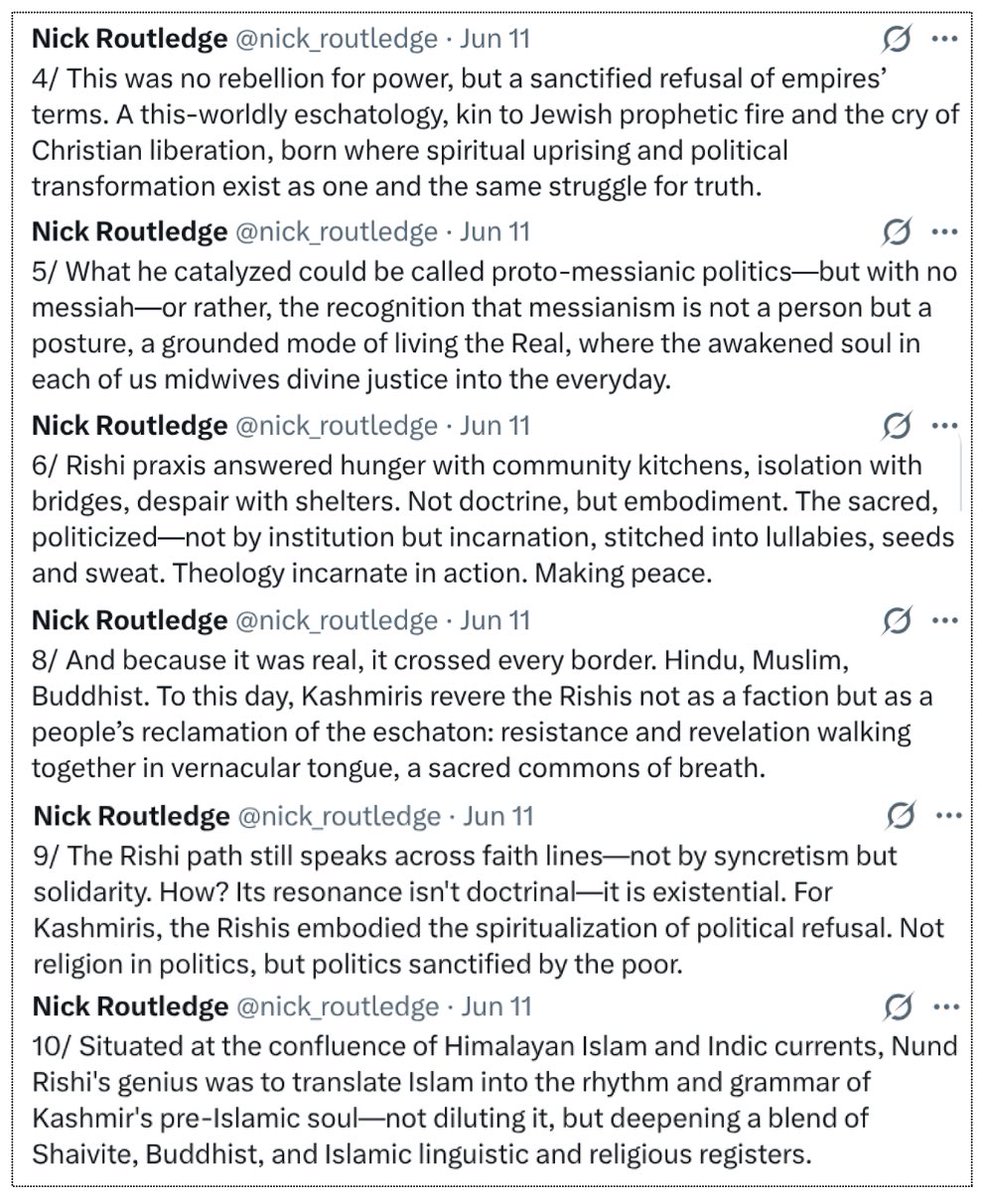
Image description
Original X alt text
|
Extended description
4/ This was no rebellion for power, but a sanctified refusal of empires’ terms. A this-worldly eschatology, kin to Jewish prophetic fire and the cry of Christian liberation, born where spiritual uprising and political transformation exist as one and the same struggle for truth. 5/ What he catalyzed could be called proto-messianic politics—but with no messiah—or rather, the recognition that messianism is not a person but a posture, a grounded mode of living the Real, where the awakened soul in each of us midwives divine justice into the everyday. 6/ Rishi praxis answered hunger with community kitchens, isolation with bridges, despair with shelters. Not doctrine, but embodiment. The sacred, politicized—not by institution but incarnation, stitched into lullabies, seeds and sweat. Theology incarnate in action. Making peace. 8/ And because it was real, it crossed every border. Hindu, Muslim, Buddhist. To this day, Kashmiris revere the Rishis not as a faction but as a people’s reclamation of the eschaton: resistance and revelation walking together in vernacular tongue, a sacred commons of breath. 9/ The Rishi path still speaks across faith lines—not by syncretism but solidarity. How? Its resonance isn't doctrinal—it is existential. For Kashmiris, the Rishis embodied the spiritualization of political refusal. Not religion in politics, but politics sanctified by the poor. 10/ Situated at the confluence of Himalayan Islam and Indic currents, Nund Rishi's genius was to translate Islam into the rhythm and grammar of Kashmir's pre-Islamic soul—not diluting it, but deepening a blend of Shaivite, Buddhist, and Islamic linguistic and religious registers.
Open original document7/ His Islam defied clerical control and caste tyranny, exposing both mullah and pandit as gatekeepers of oppression. Dismantling conversionism and hierarchy alike, his egalitarian ethos extended profoundly to women—recognized as equals—a revolutionary stance in 14th C. Kashmir.
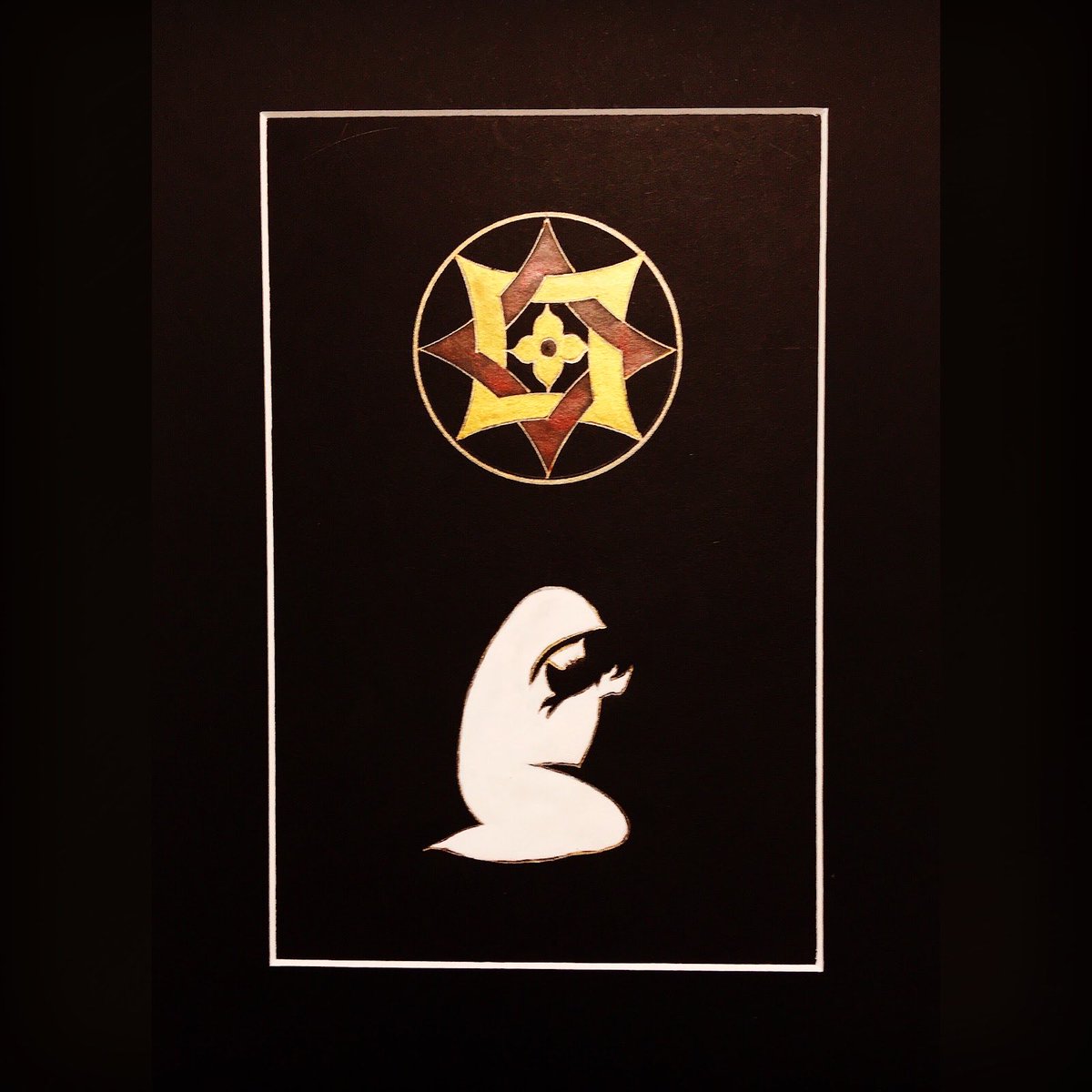
Image description
Original X alt text
Image of Moslem woman at prayer aside eight-pointed star.
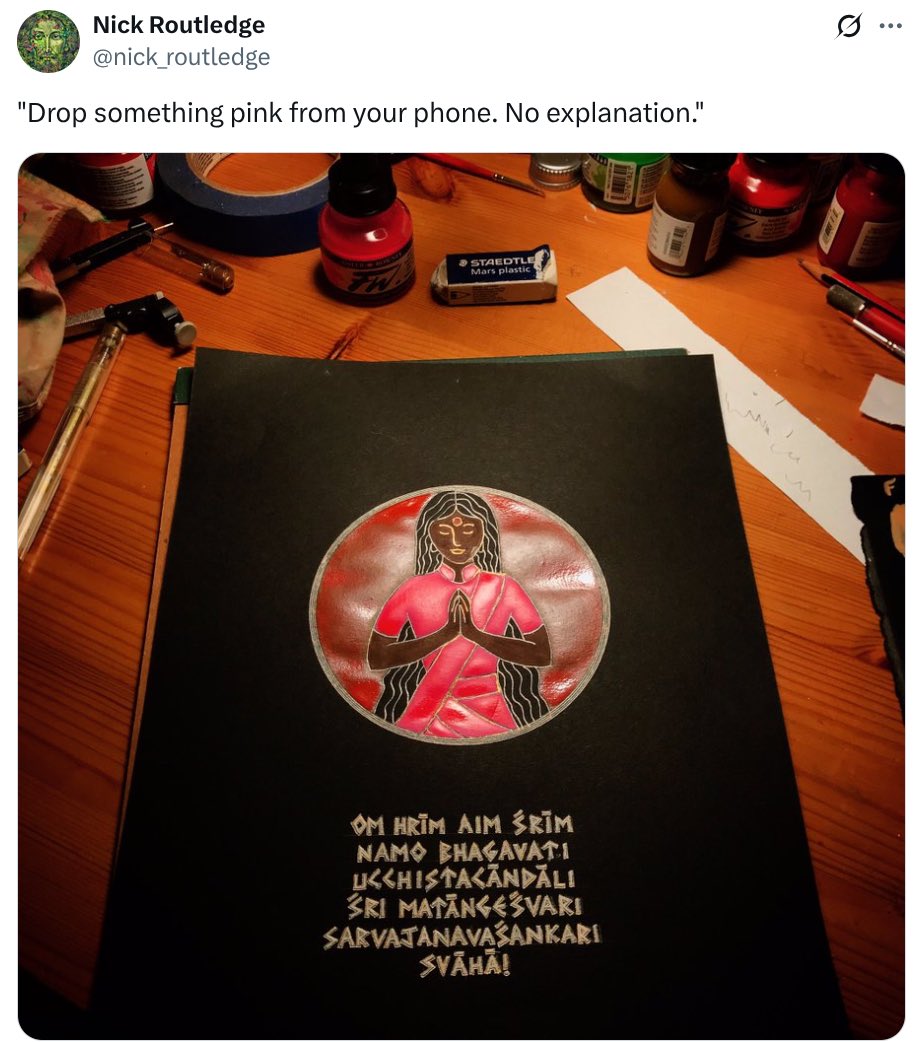
Image description
Original X alt text
Copy of tweet here: "Drop something pink from your phone. No explanation." Image: Painting of S. Asian woman in pink sari, in prayer pose. With calligraphy: oṃ hrīṃ aiṃ śrīṃ namo bhagavati ucchiṣṭacāṇḍāli śrī mātāṅgeśvari sarvajanavaśaṅkari svāhā!