
@CarlMcColman 2/3 Consider Maitreya not as latent but immediate cipher-bridge between Dōgen's being-time and messianic tempieternity—the future Buddha as the pressure of universal compassion, and eschatological consciousness, recognized as different time-grammars of the same, charged now-time.
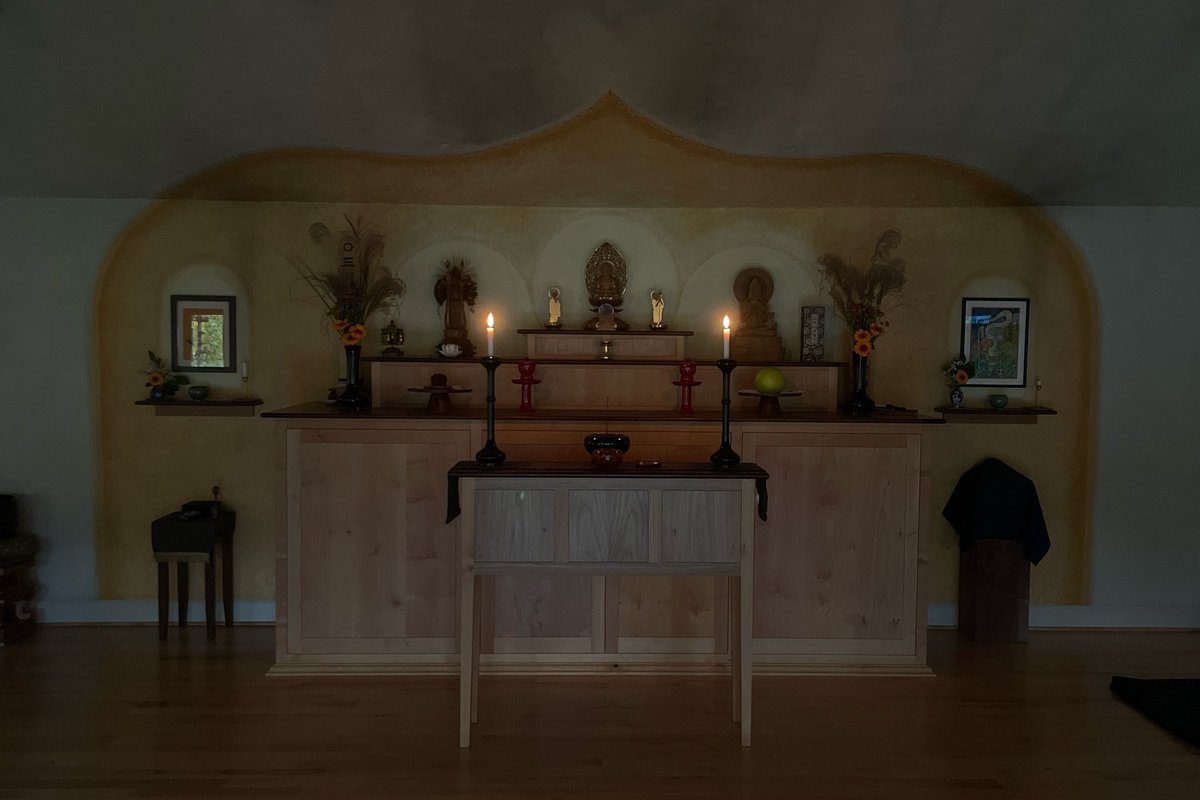
Image description
Original X alt text
Dawn altar at Buddha Eye Zen Community Temple, Eugene, OR
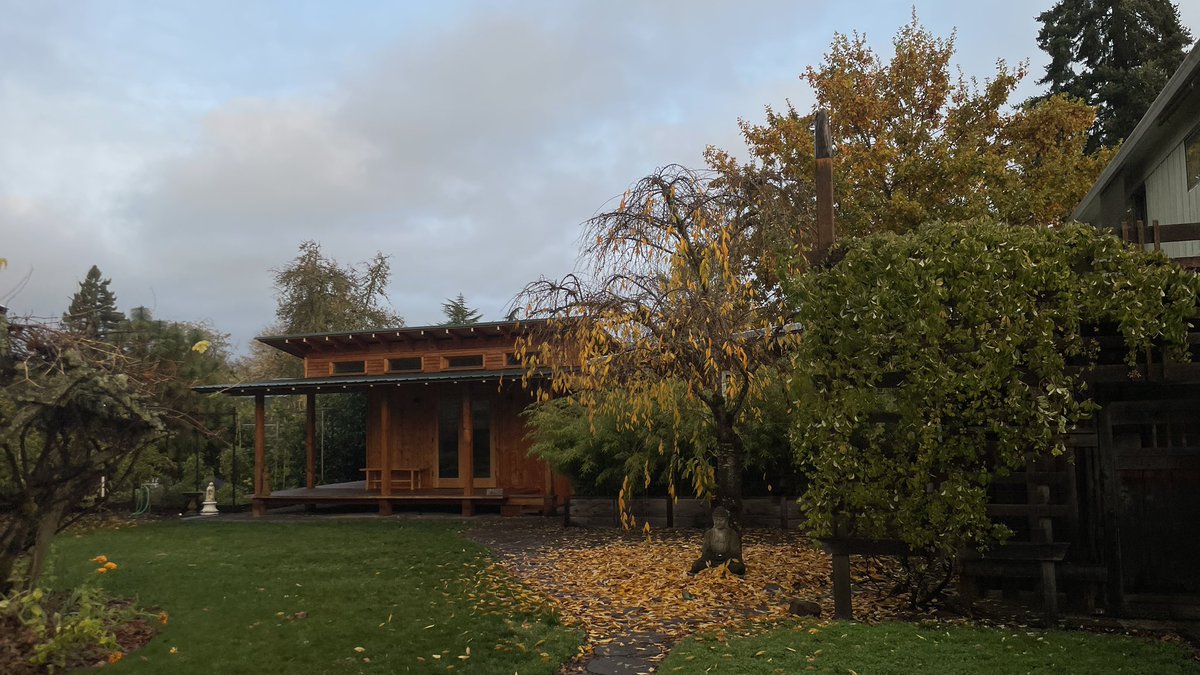
Image description
Original X alt text
The garden after emerging from morning service.
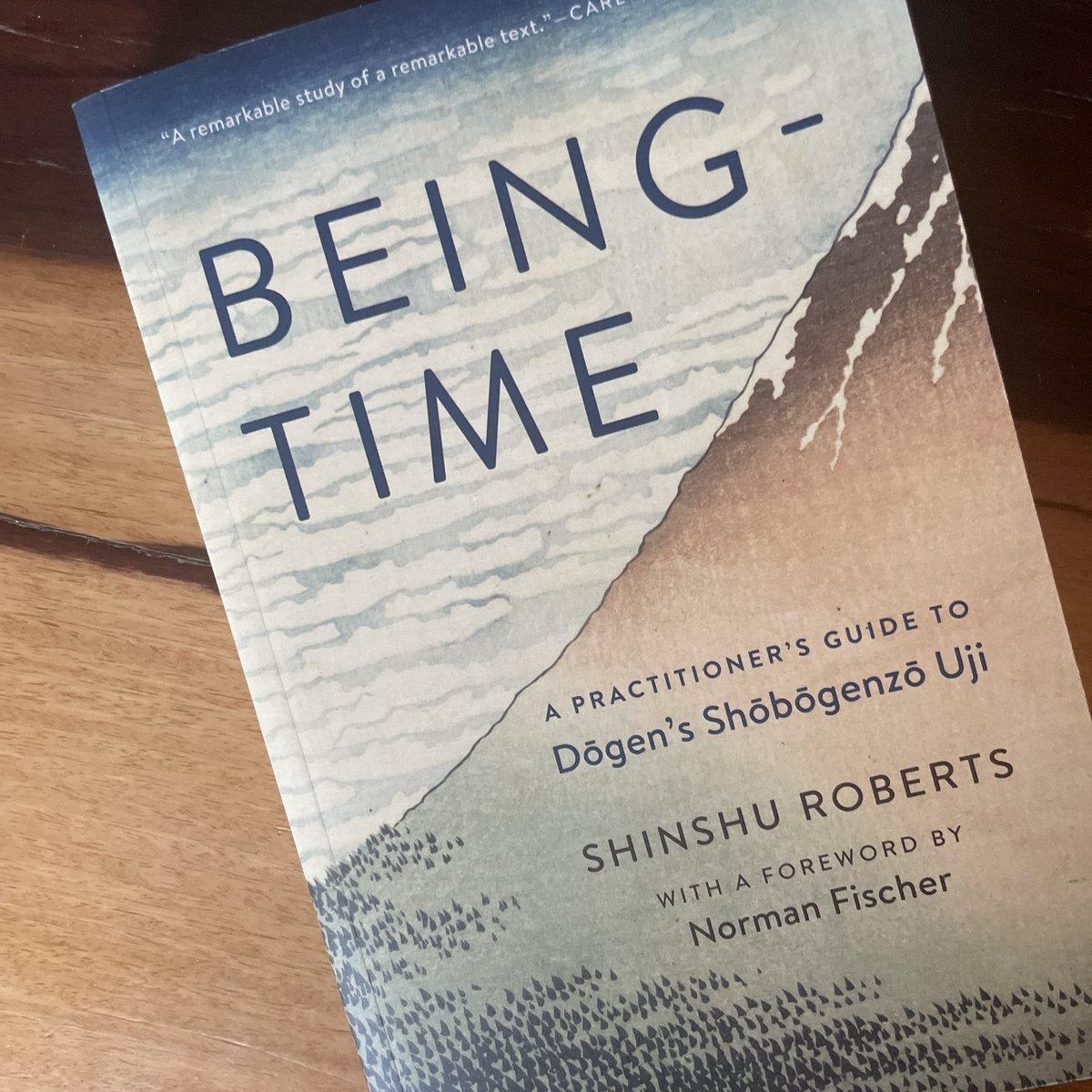
Image description
Original X alt text
Being-Time by Shinshu Robert's, a gift from dearest brother, teacher and griend, Ejo McMullen Roshi.
10/ Situated at the confluence of Himalayan Islam and Indic currents, Nund Rishi's genius was to translate Islam into the rhythm and grammar of Kashmir's pre-Islamic soul—not diluting it, but deepening a blend of Shaivite, Buddhist, and Islamic linguistic and religious registers.
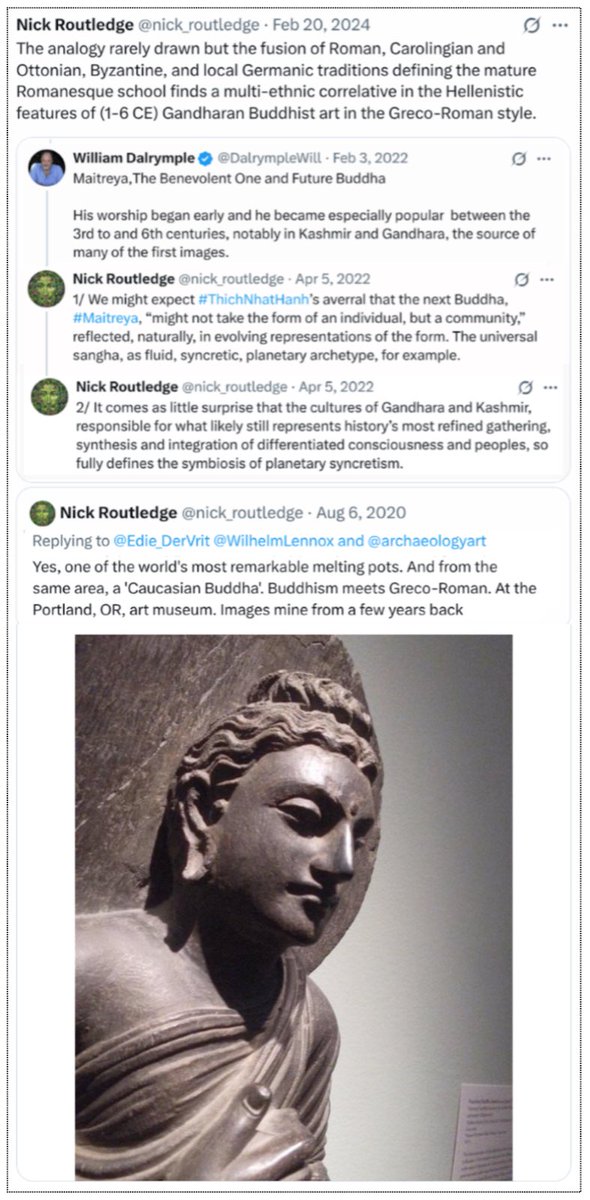
Image description
Original X alt text
Copy of tweet, image and quote tweet here:
Extended description
Pictured speaker / quoted attribution: Nick Saved source record associated with pictured writing; full saved record, not an exact pictured excerpt. Passage boundary: Source: archive.nickroutledge.org/post/1759906786222711258 Preserve quoted-author distinctions; the containing tweet does not confer authorship. @Hallowedart The analogy rarely drawn but the fusion of Roman, Carolingian and Ottonian, Byzantine, and local Germanic traditions defining the mature Romanesque school finds a multi-ethnic correlative in the Hellenistic features of (1-6 CE) Gandharan Buddhist art in the Greco-Roman style. t.co/c3Sp36B7w8
Open original documentExtended description
Pictured speaker / quoted attribution: William Dalrymple; Nick quoting Thich Nhat Hanh; Nick planetary syncretism Saved source record associated with pictured writing; full saved record, not an exact pictured excerpt. Passage boundary: Source: Preserve quoted-author distinctions; the containing tweet does not confer authorship. Copy of tweet thread here: Maitreya,The Benevolent One and Future Buddha His worship began early and he became especially popular between the 3rd to and 6th centuries, notably in Kashmir and Gandhara, the source of many of the first images. 1/ We might expect #ThichNhatHanh’s averral that the next Buddha, #Maitreya, “might not take the form of an individual, but a community,” reflected, naturally, in evolving representations of the form. The universal sangha, as fluid, syncretic, planetary archetype, for example. 2/ It comes as little surprise that the cultures of Gandhara and Kashmir, responsible for what likely still represents history’s most refined gathering, synthesis and integration of differentiated consciousness and peoples, so fully defines the symbiosis of planetary syncretism.
Open original documentExtended description
Pictured speaker / quoted attribution: Nick Saved source record associated with pictured writing; full saved record, not an exact pictured excerpt. Passage boundary: Source: archive.nickroutledge.org/post/1291515355307761664 Preserve quoted-author distinctions; the containing tweet does not confer authorship. @Edie_DerVrit @WilhelmLennox @archaeologyart Yes, one of the world's most remarkable melting pots. And from the same area, a 'Caucasian Buddha'. Buddhism meets Greco-Roman. At the Portland, OR, art museum. Images mine from a few years back t.co/4FklVAchSh
Open original document