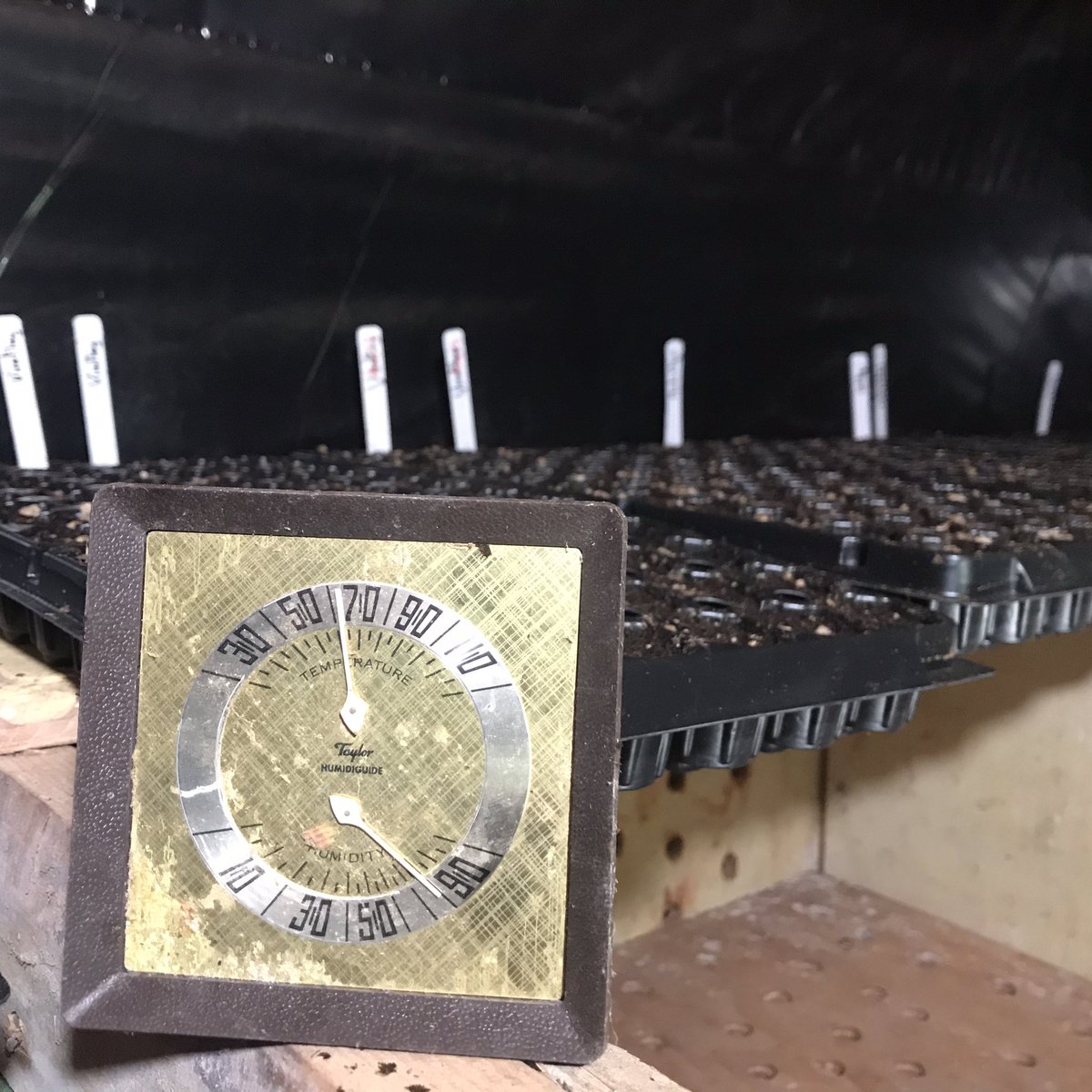
RT @AgrarianSharing: By now, we've been seeding overwintering crops onto the nursery tables for months. Spinach, however, we treat differently. Always tricky this time of year (its germ declines above 68 °F), heatwaves complicate the picture further. Lowtech spinach propagation in 100° temps, then...
Image description
Original X alt text
Excerpt from Facebook post. The image? Flats of seeded spinach, in a cool basement, this morn. Why spinach? Dense beds of spinach excel as a diverse, cut-and-come-again winter-greenhouse crop, all the way through early-to-mid spring. In the fields, hardy varieties - with smaller, thicker leaves; shorter, tougher stems; a prostrate habit etc. - are among our most cold- and snow-tolerant crop-types. Winter is the perfect season for spinach: almost every cultivar puts on size and doesn’t bolt, for months! Given that the next couple of weeks represent a key window for seeding winter spinach hereabouts, and given that summer temperature trends only look set to make winter-crop germination into the hottest months of the year, a deepening challenge here as elsewhere, plan on adapting to spinach needs!
Spinach is one of our most temperature-sensitive, cold-season crops. Given that we establish over-wintering crops during the hottest months of summer, how do we tackle the spinach-germination challenge? #PNWwintercropping @CultivateOregon #PPCAgProject facebook.com/groups/pnwwintergardening/permalink/2781460945477322/