
@mattleeanderson @JeremyTreat5 Margaret Miles’s 'Fullness of Life' (1981) belongs in this conversation, too. It credibly recovers Christian asceticism as “keeping body and soul together,” its end not bodily negation but vivification: “We beg of you, make us truly alive.” That reading opened into this thread...
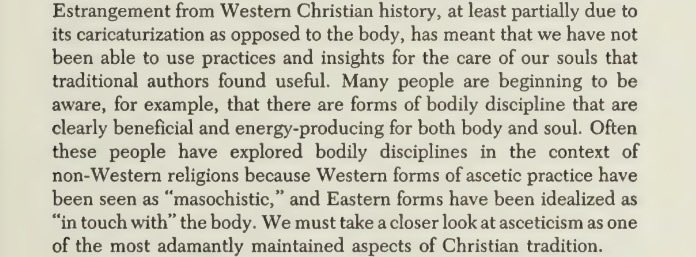
Image description
Original X alt text
Estrangement from Western Christian history, at least partially due to its caricaturization as opposed to the body, has meant that we have not been able to use practices and insights for the care of our souls that traditional authors found useful. Many people are beginning to be aware, for example, that there are forms of bodily discipline that are clearly beneficial and energy-producing for both body and soul. Often these people have explored bodily disciplines in the context of non-Western religions because Western forms of ascetic practice have been seen as “masochistic,” and Eastern forms have been idealized as “in touch with” the body. We must take a closer look at asceticism as one of the most adamantly maintained aspects of Christian tradition.
1/5 I’ve been reading of Serapion’s prayer, “We beg of you, make us truly alive”, and the movement from deadness into life standing at the very heart of early Xian experience, before the radiant immediacy of Jesus’ presence hardened into creed, ecclesial structure or moral code.
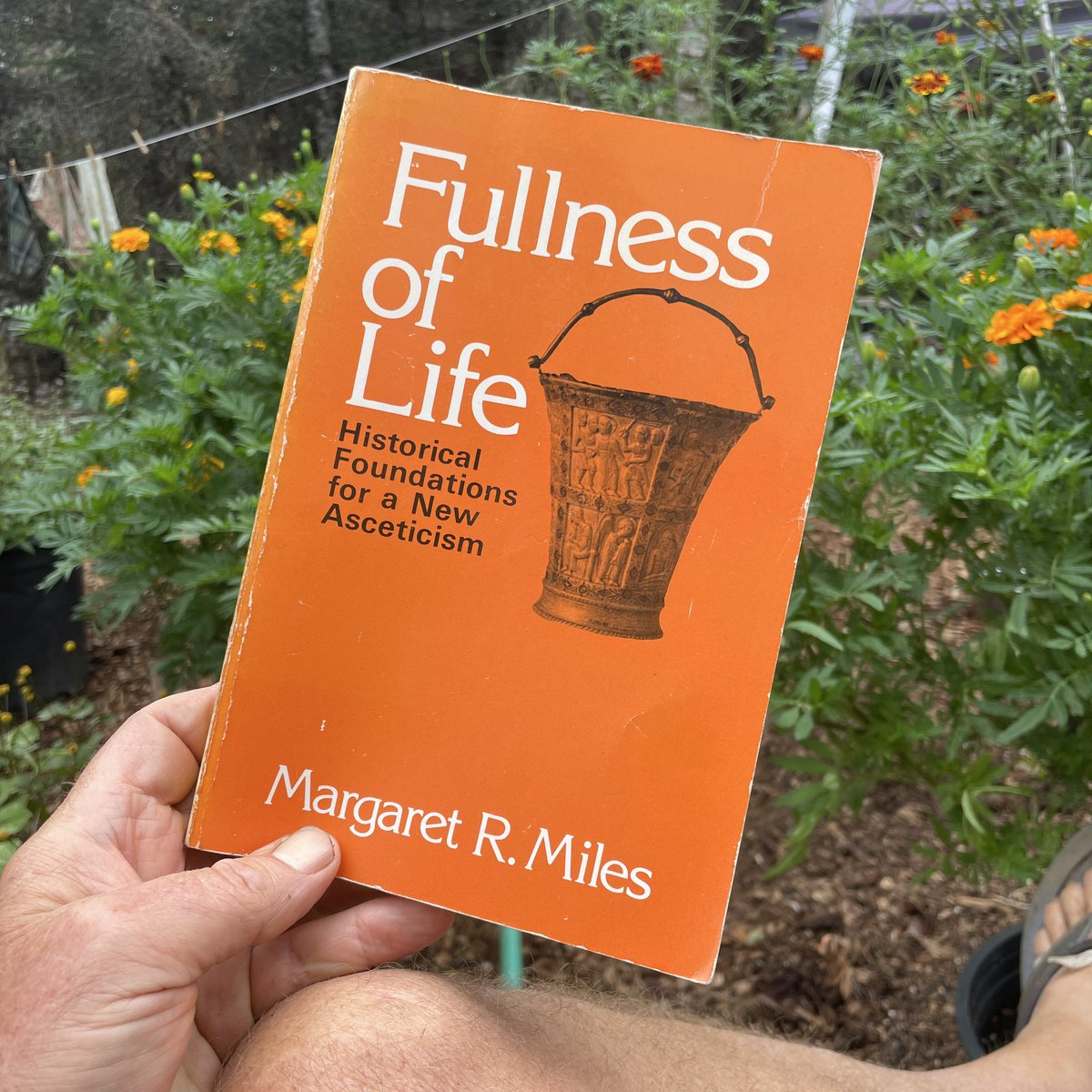
Image description
Original X alt text
Photograph of “Fullness of Life: Historical Foundations for a New Asceticism” by Margaret R. Miles