
Revelation rends the psychic structures by which we conceal it from ourselves—not simply that another world becomes visible, but that only the one who is simultaneously transformed can see it, and in that double disclosure becomes capable of inhabiting it. This is metanoia.

Image description
Original X alt text
Kicking back in a summer meadow.
@RDGStout God is also given not as inference from existence, consciousness, beauty or order, but as immediate experience itself; theophany undivided from its apprehension. God and lived experience, distinct but not separate, one undivided actuality.
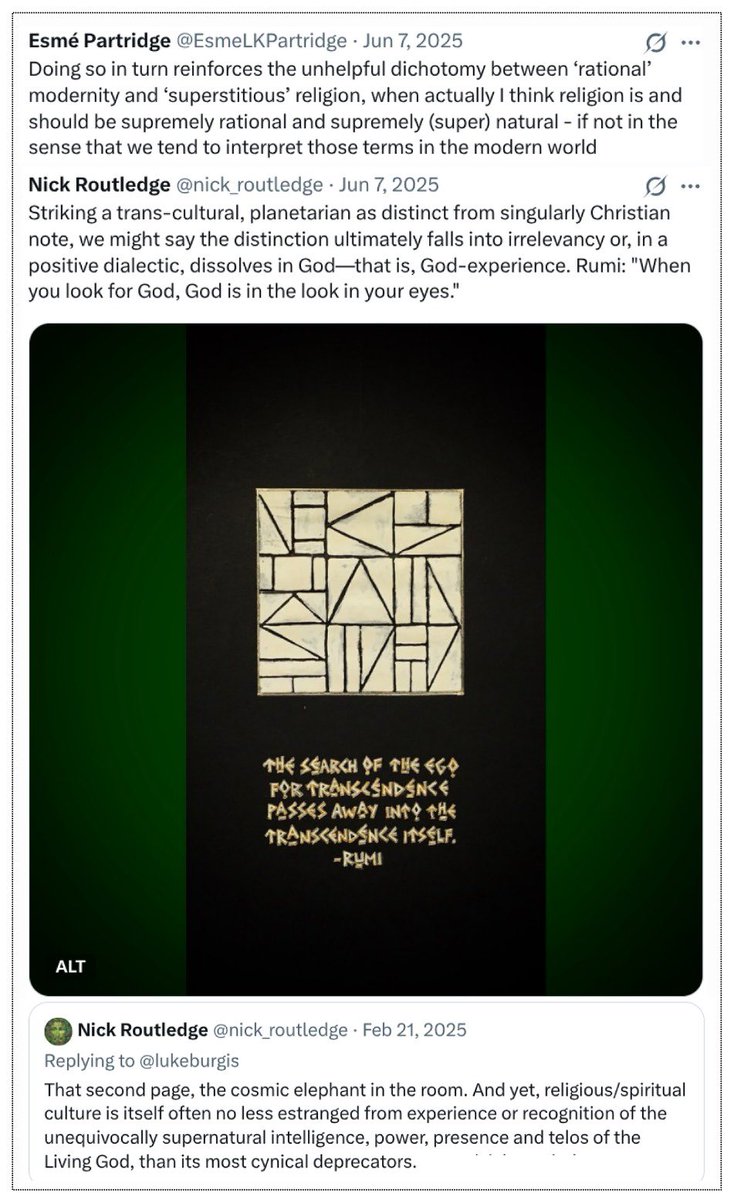
Image description
Extended description
Doing so in turn reinforces the unhelpful dichotomy between ‘rational’ modernity and ‘superstitious’ religion, when actually I think religion is and should be supremely rational and supremely (super) natural - if not in the sense that we tend to interpret those terms in the modern world. Striking a trans-cultural, planetarian as distinct from singularly Christian note, we might say the distinction ultimately falls into irrelevancy or, in a positive dialectic, dissolves in God—that is, God-experience. Rumi: "When you look for God, God is in the look in your eyes." [Painting, abstract image with calligraphy reading: “The search of the ego for transcendence passes away into the transcendence itself. - Rumi”] Subtweet: That second page, the cosmic elephant in the room. And yet, religious/spiritual culture is itself often no less estranged from experience or recognition of the unequivocally supernatural intelligence, power, presence and telos of the Living God, than its most cynical deprecators.
Open original document