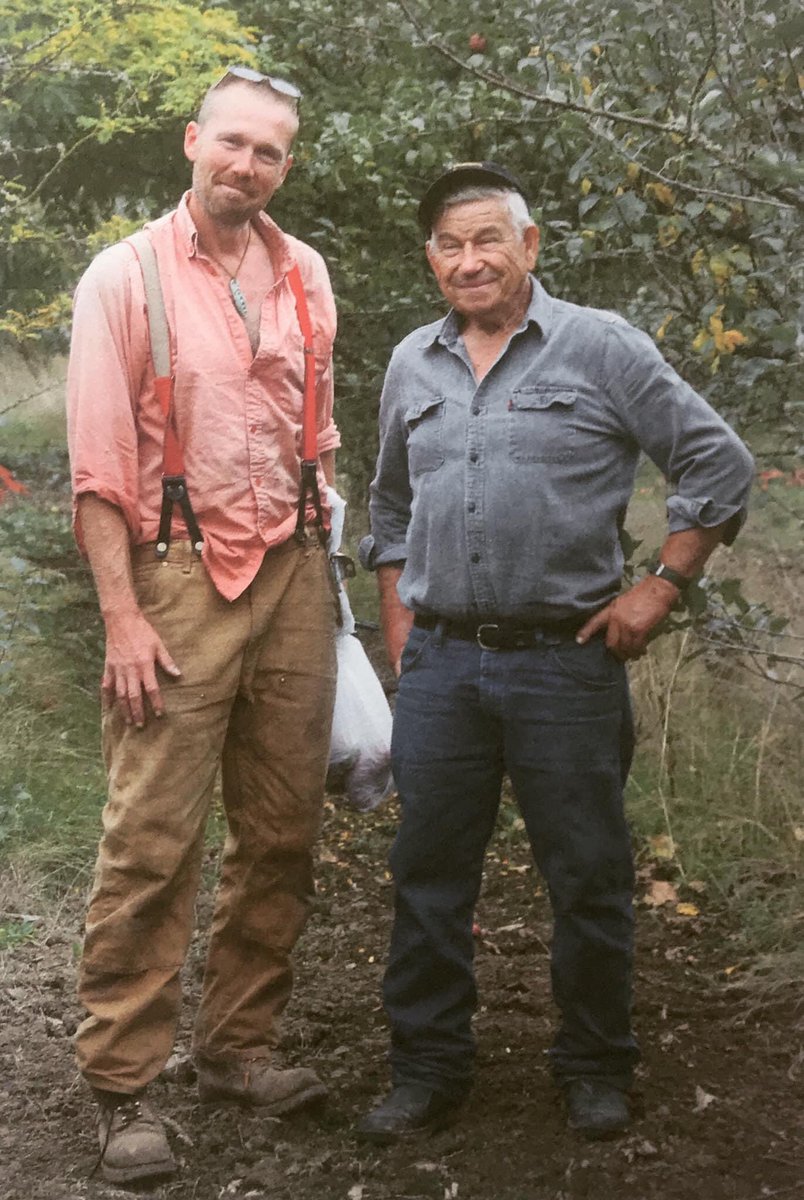
@HaddenTurner end\ We embrace moderns but the great majority we recommend are heirlooms (Hudson’s Golden Gem, a local apple, may be the most distinctive I’ve tasted among thousands) and, as befits our own provenance, global. We carry pear varieties with 2,000 year(!) histories of cultivation.
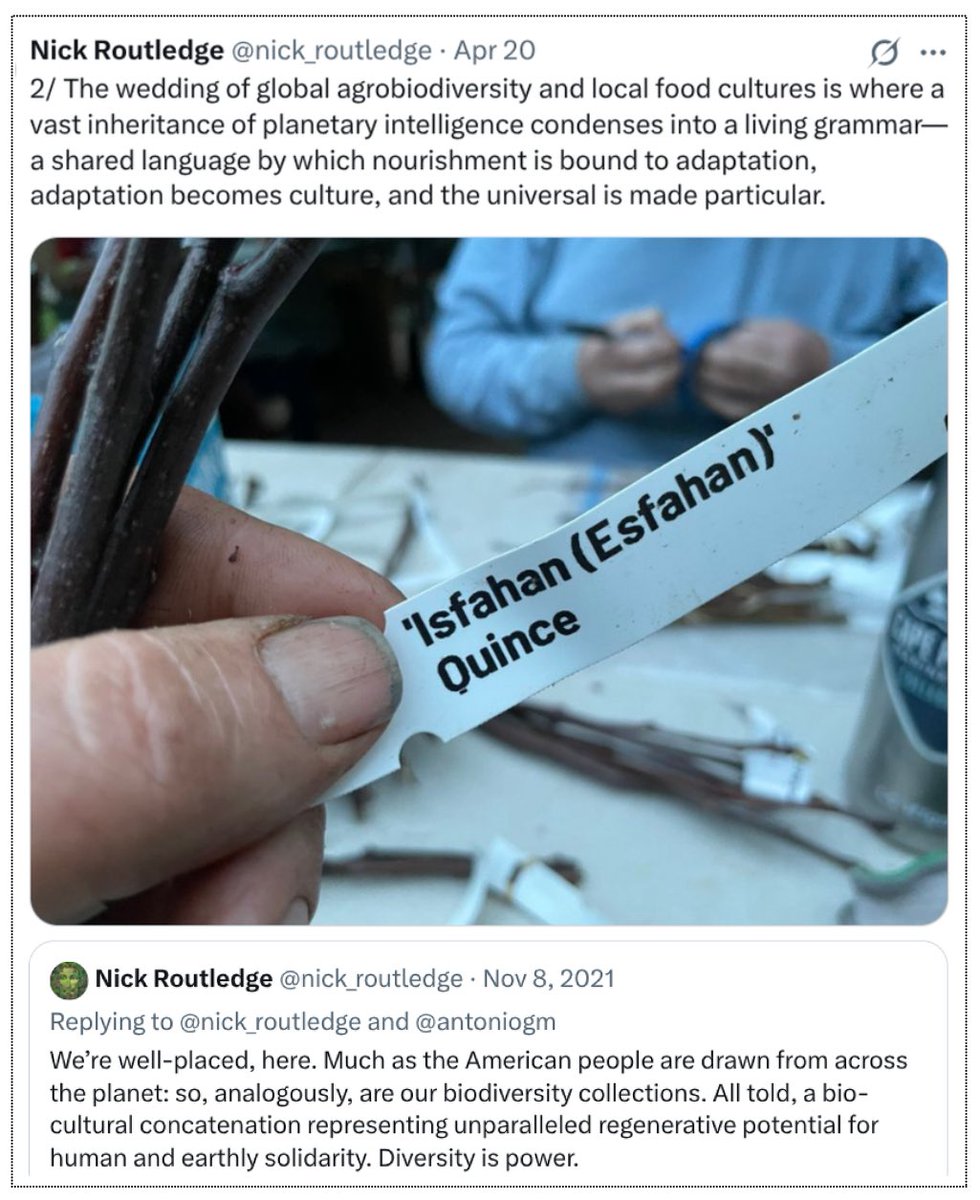
Image description
Original X alt text
2/ The wedding of global agrobiodiversity and local food cultures is where a vast inheritance of planetary intelligence condenses into a living grammar—a shared language by which nourishment is bound to adaptation, adaptation becomes culture, and the universal is made particular. Image of hand holding labeled scion of Isfahan (‘Esfahan’) quince Quote tweet: We’re well-placed, here. Much as the American people are drawn from across the planet: so, analogously, are our biodiversity collections. All told, a bio-cultural concatenation representing unparalleled regenerative potential for human and earthly solidarity. Diversity is power.
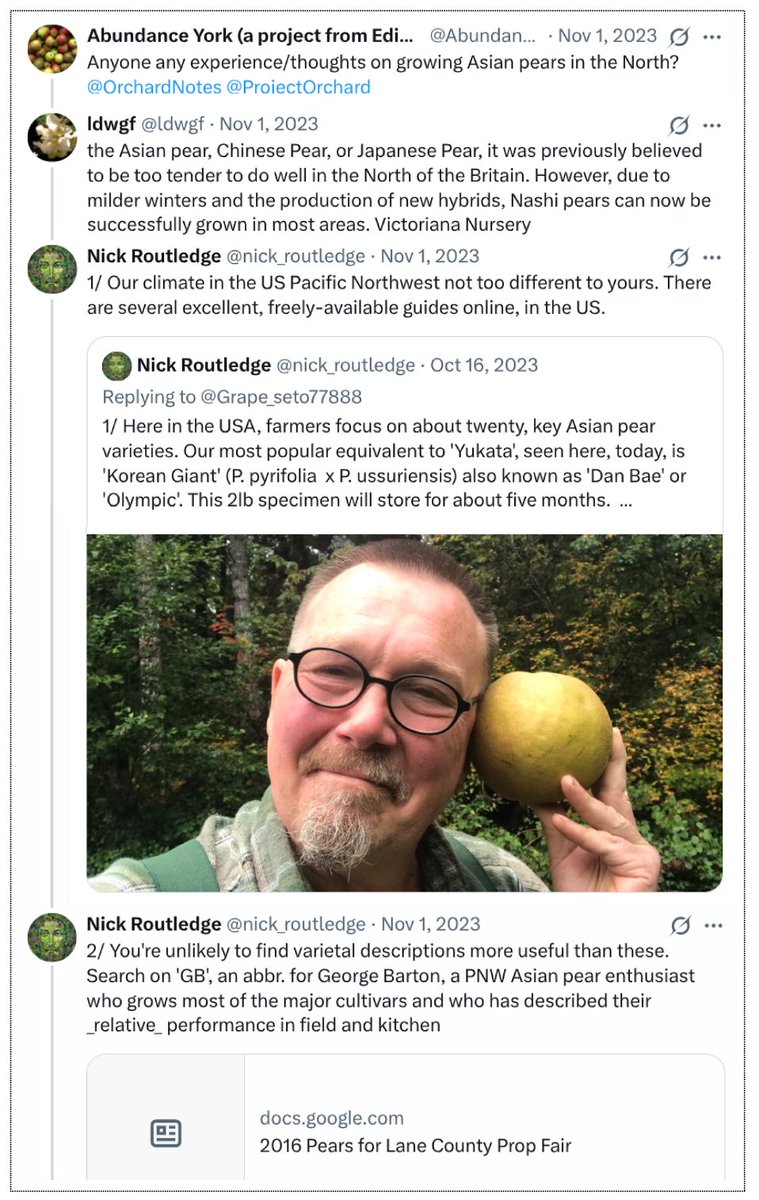
Image description
Extended description
Abundance York (a project from Edible York) Anyone any experience/thoughts on growing Asian pears in the North? @OrchardNotes @ProjectOrchard ldwgf the Asian pear, Chinese Pear, or Japanese Pear, it was previously believed to be too tender to do well in the North of the Britain. However, due to milder winters and the production of new hybrids, Nashi pears can now be successfully grown in most areas. Victoriana Nursery 1/ Our climate in the US Pacific Northwest not too different to yours. There are several excellent, freely-available guides online, in the US. Quote tweet: 1/ Here in the USA, farmers focus on about twenty, key Asian pear varieties. Our most popular equivalent to 'Yukata', seen here, today, is 'Korean Giant' (P. pyrifolia x P. ussuriensis) also known as 'Dan Bae' or 'Olympic'. This 2lb specimen will store for about five months. nick_routledge 2/ You're unlikely to find varietal descriptions more useful than these. Search on 'GB', an abbr. for George Barton, a PNW Asian pear enthusiast who grows most of the major cultivars and who has described their _relative_ performance in field and kitchen –
Open original documentSo, who in Oregon planted the 4,500 unique varieties making up the world’s most diverse apple orchard and, as such, a cornerstone planetary resource for foodshed experts researching ‘future heirlooms’? As it happens, the American-born son of a Ukrainian mother and Russian father.