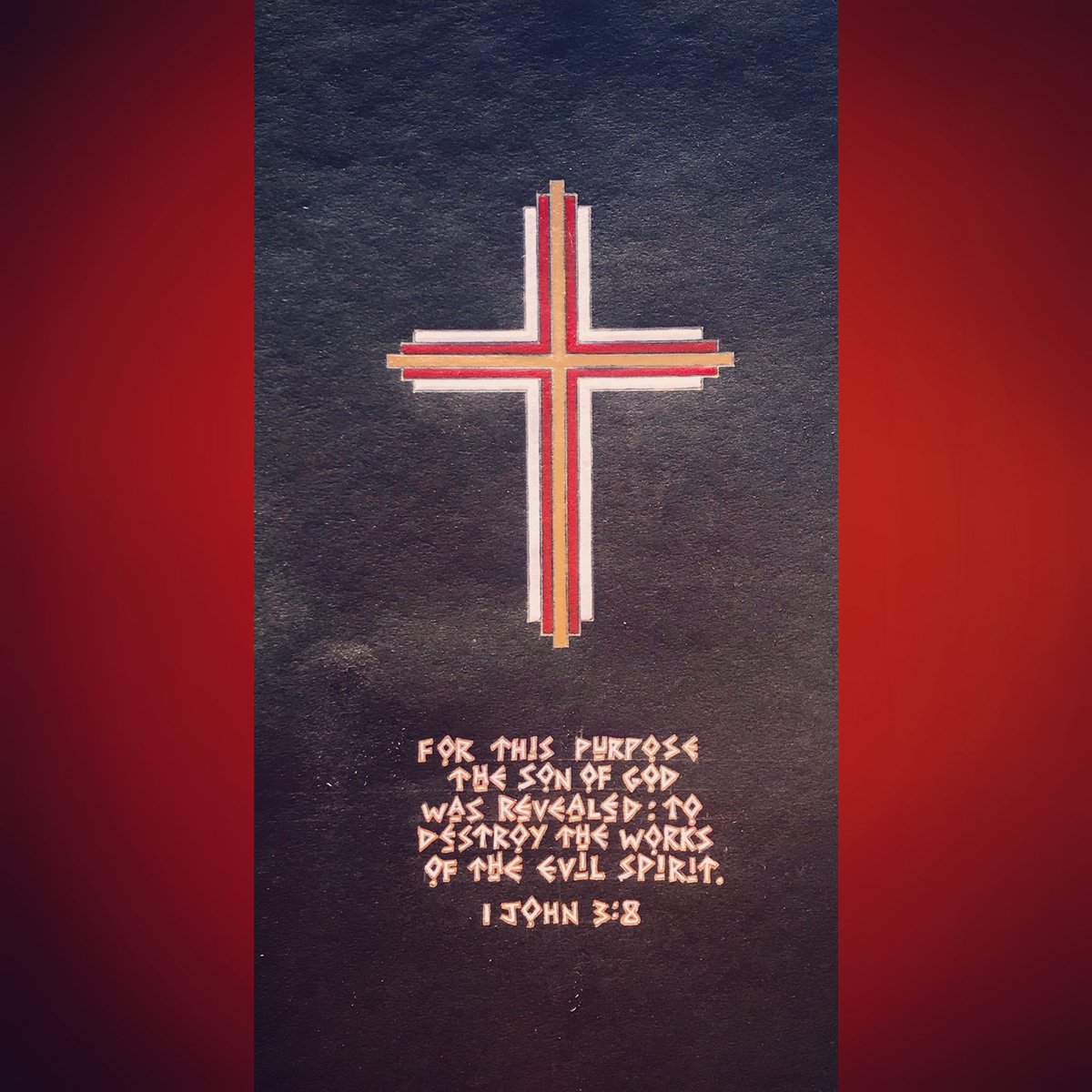
@WillManidis @firstthingsmag 3/ But the essay makes a false binary: universal peace bought by dissolving difference, or Christian truth defended by division. It entirely misses that division—wheat from tares—is intrinsic to apocalypsis itself. In Christ, division is not peace’s opposite but its pathway.
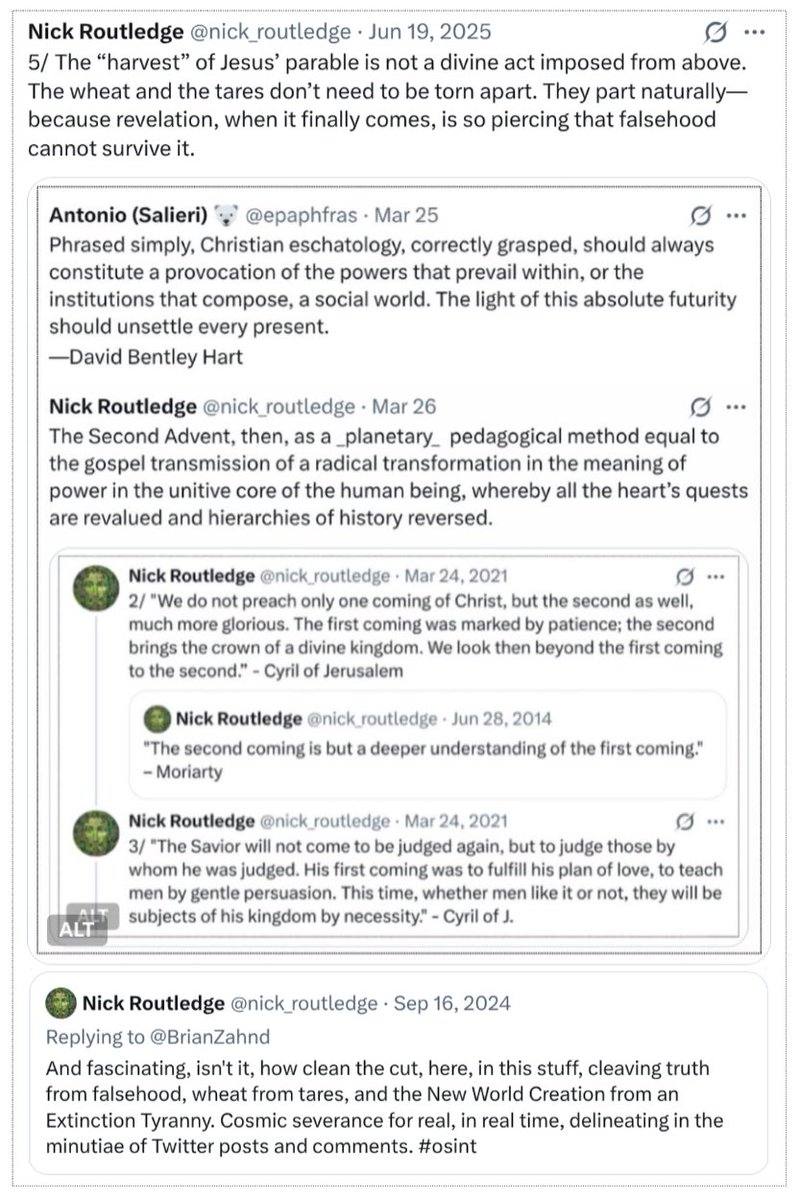
Image description
Extended description
5/ The “harvest” of Jesus’ parable is not a divine act imposed from above. The wheat and the tares don’t need to be torn apart. They part naturally—because revelation, when it finally comes, is so piercing that falsehood cannot survive it. Phrased simply, Christian eschatology, correctly grasped, should always constitute a provocation of the powers that prevail within, or the institutions that compose, a social world. The light of this absolute futurity should unsettle every present. —David Bentley Hart The Second Advent, then, as a _planetary_ pedagogical method equal to the gospel transmission of a radical transformation in the meaning of power in the unitive core of the human being, whereby all the heart’s quests are revalued and hierarchies of history reversed. 2/ "We do not preach only one coming of Christ, but the second as well, much more glorious. The first coming was marked by patience; the second brings the crown of a divine kingdom. We look then beyond the first coming to the second.” - Cyril of Jerusalem "The second coming is but a deeper understanding of the first coming." – Moriarty 3/ "The Savior will not come to be judged again, but to judge those by whom he was judged. His first coming was to fulfill his plan of love, to teach men by gentle persuasion. This time, whether men like it or not, they will be subjects of his kingdom by necessity." - Cyril of J. Quote tweet: And fascinating, isn't it, how clean the cut, here, in this stuff, cleaving truth from falsehood, wheat from tares, and the New World Creation from an Extinction Tyranny. Cosmic severance for real, in real time, delineating in the minutiae of Twitter posts and comments. #osint
Open original documentNot an eye for an eye, but to lay a sword down between those who would with the sword, and those who would with peace as, I think, Nicodemus the Philosopher describes it in Gibran's Jesus, Son of Man. Art, acrylinc inks on paper.