
@seenunseenmag 23/ The entanglement of sacral English nationhood and Abrahamic prophetology runs deeper than most realize. Blake's New Jerusalem names it—not English triumphalism dressed in light, but planetary reconciliation breaking through a particular, historically freighted aperture.
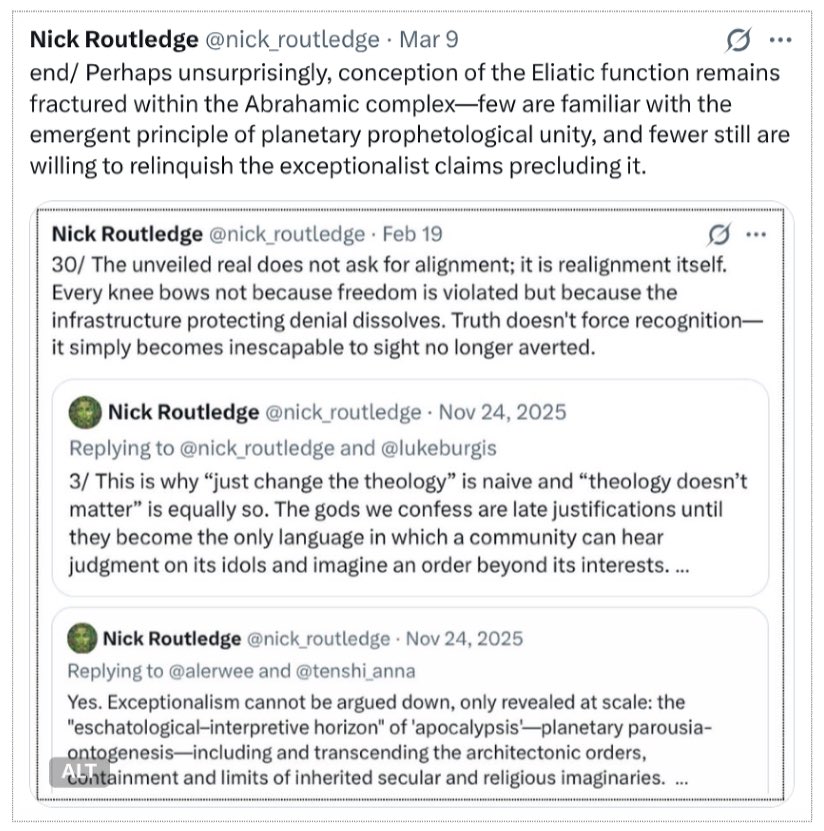
Image description
Extended description
end/ Perhaps unsurprisingly, conception of the Eliatic function remains fractured within the Abrahamic complex—few are familiar with the emergent principle of planetary prophetological unity, and fewer still are willing to relinquish the exceptionalist claims precluding it. 30/ The unveiled real does not ask for alignment; it is realignment itself. Every knee bows not because freedom is violated but because the infrastructure protecting denial dissolves. Truth doesn't force recognition—it simply becomes inescapable to sight no longer averted. 3/ This is why “just change the theology” is naive and “theology doesn’t matter” is equally so. The gods we confess are late justifications until they become the only language in which a community can hear judgment on its idols and imagine an order beyond its interests. Yes. Exceptionalism cannot be argued down, only revealed at scale: the "eschatological–interpretive horizon" of 'apocalypsis'—planetary parousia-ontogenesis—including and transcending the architectonic orders, containment and limits of inherited secular and religious imaginaries.
Open original document@BremenBod I recall the Redcrosse Project, an effort by contemporary English poets to reclaim St. George from his co-opting by the UK's far right. Fitting, too, that St. George represents a central, interspiritual, Eliatic prototype—most notably in his tie to Islam's Green Prophet, Khezr.
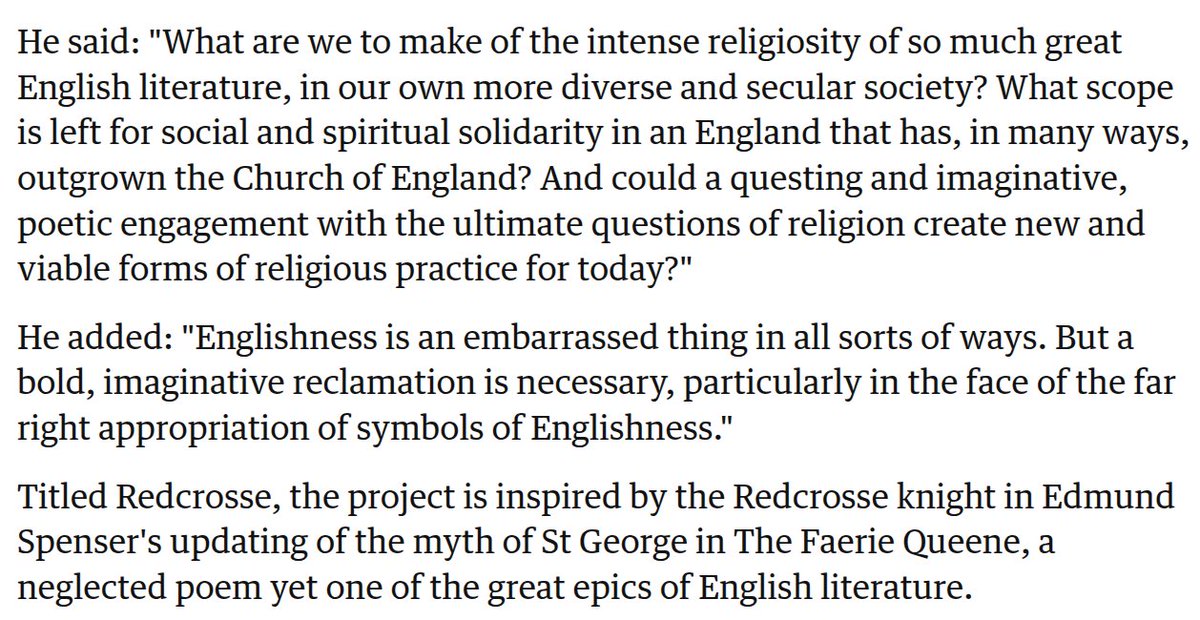
Image description
Original X alt text
He said: "What are we to make of the intense religiosity of so much great English literature, in our own more diverse and secular society? What scope is left for social and spiritual solidarity in an England that has, in many ways, outgrown the Church of England? And could a questing and imaginative, poetic engagement with the ultimate questions of religion create new and viable forms of religious practice for today?" He added: "Englishness is an embarrassed thing in all sorts of ways. But a bold, imaginative reclamation is necessary, particularly in the face of the far right appropriation of symbols of Englishness." Titled Redcrosse, the project is inspired by the Redcrosse knight in Edmund Spenser's updating of the myth of St George in The Faerie Queene, a neglected poem yet one of the great epics of English literature.