
@CTmagazine @jeff_bilbro 10/ The point is not creation instead of scripture, but their reconciliation in incarnation itself. The biblical narrative and the earth narrative illuminate one another because Jesus bound both into a single reconciliatory movement, the same redemptive unfolding, within history.
@Plough For prophetic earthworkers, food, farming, eating, and ecological-relations aren’t merely ethical or practical matters—they constitute the crucible where Truth is discerned, inhabited and generatively realized in an immanent covenantal dynamism transfiguring all created reality.
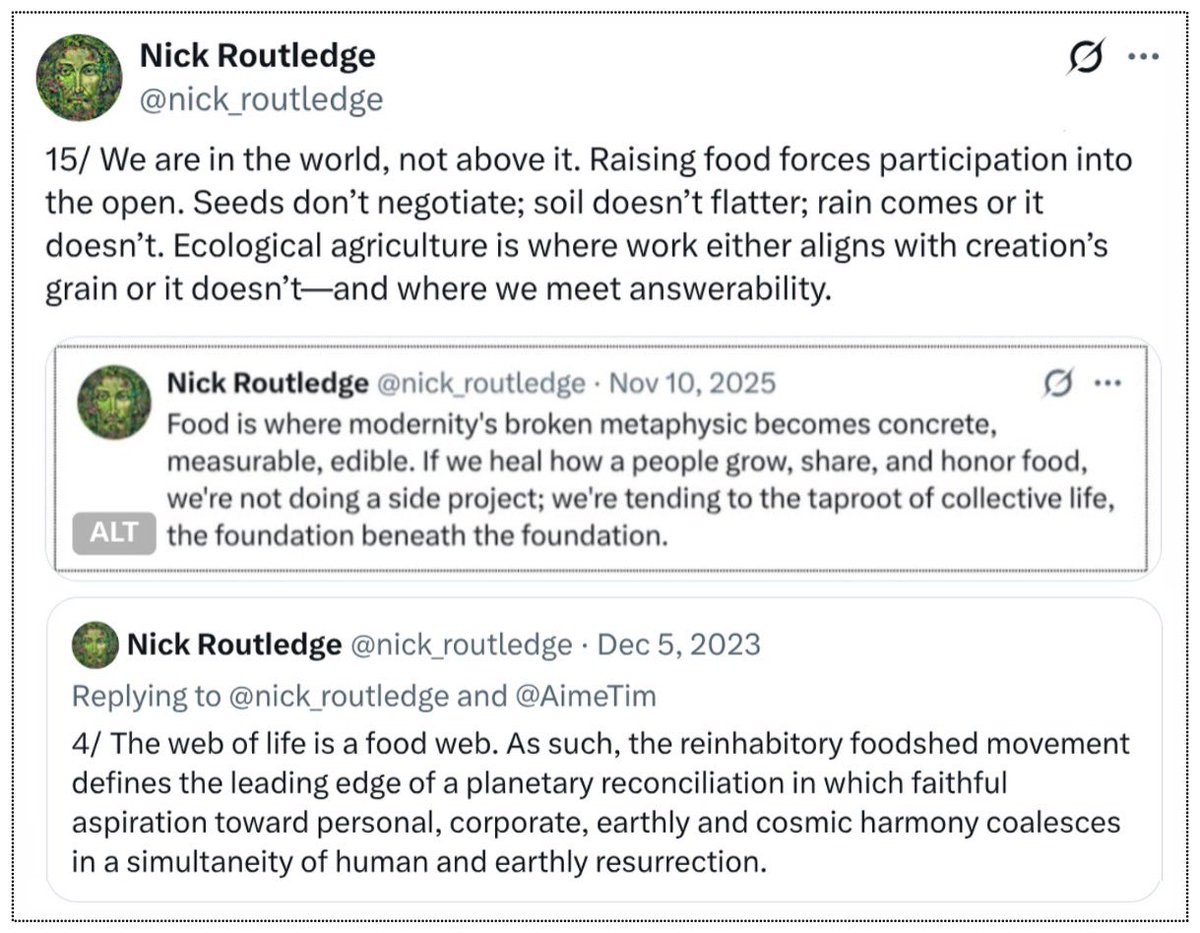
Image description
Original X alt text
Copy of tweet: 15/ We are in the world, not above it. Raising food forces participation into the open. Seeds don’t negotiate; soil doesn’t flatter; rain comes or it doesn’t. Ecological agriculture is where work either aligns with creation’s grain or it doesn’t—and where we meet answerability. Food is where modernity's broken metaphysic becomes concrete, measurable, edible. If we heal how a people grow, share, and honor food, we're not doing a side project; we're tending to the taproot of collective life, the foundation beneath the foundation. 4/ The web of life is a food web. As such, the reinhabitory foodshed movement defines the leading edge of a planetary reconciliation in which faithful aspiration toward personal, corporate, earthly and cosmic harmony coalesces in a simultaneity of human and earthly resurrection.