
@lukeburgis The deepest “first principle” here is that God chose visibility in humanness. Immanuel means God’s life takes flesh in us, so how we show up is how God arrives and takes public form—or is obscured, even contradicted.
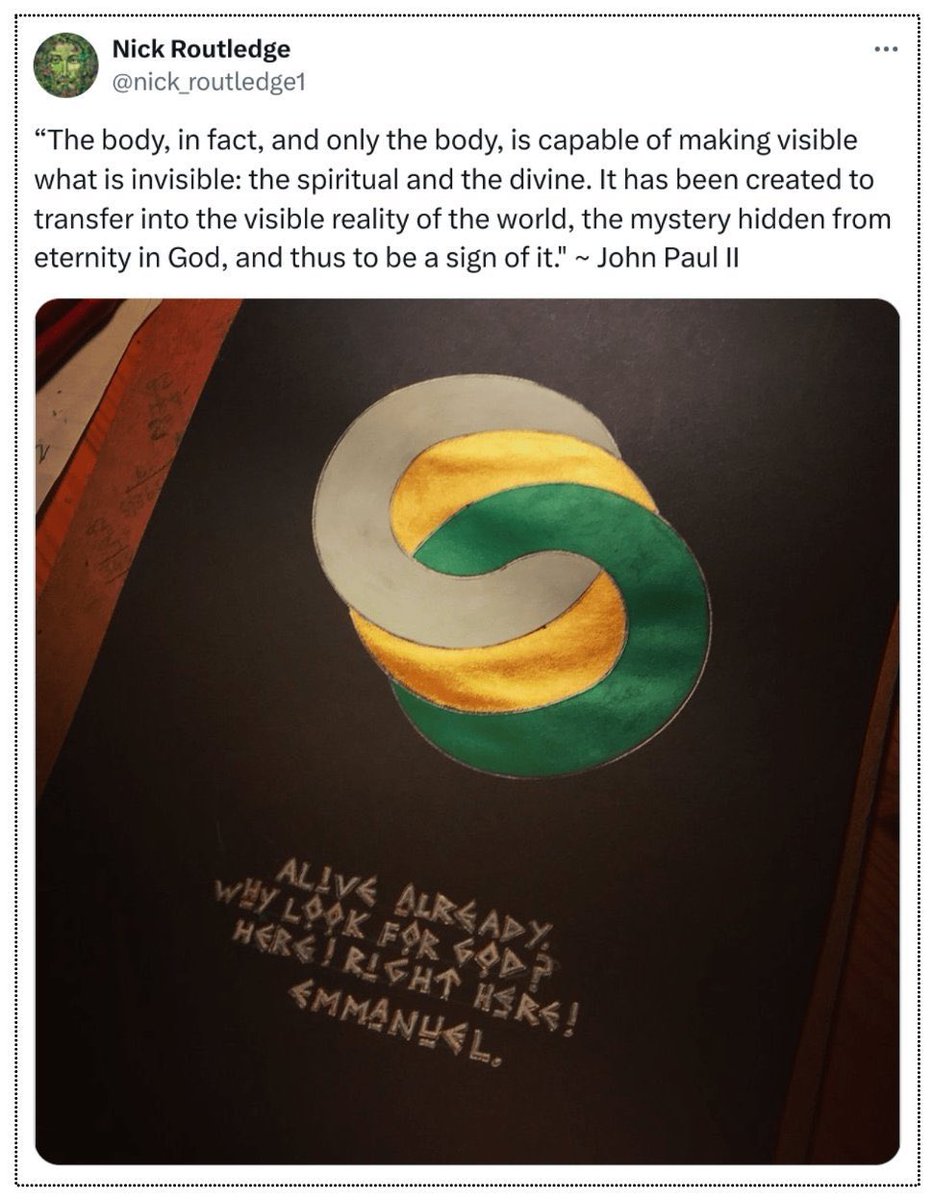
Image description
Original X alt text
John Paul II: “The body, in fact, and only the body, is capable of making visible what is invisible: the spiritual and the divine. It has been created to transfer into the visible reality of the world, the mystery hidden from eternity in God, and thus to be a sign of it." Painting of three interlocking rings with calligraphy reading, Alive already. Why look for God? Here! Right here! Emmanuel. [After Abd-ul-Jabbar Niffari: "Why look for God up there? He's here! Here!"]
3/ Here, a mode of life that remakes everything stops being an anomalous “signal” in a dying order, and becomes the structuring principle and public condition of reality. This is resurrection power no longer an exception within history but the fulfilled logic of history itself.
View this post’s context →