
RT @nick_routledge: @Plough 1/ At the theo-experiential seam, Islam has an easier time with the Zwickau archetype. Blake, not unnaturally, is apt: “The Religions of all Nations are derived from each Nation’s different reception of the Poetic Genius, which is every where call’d the Spirit of Prophecy.”
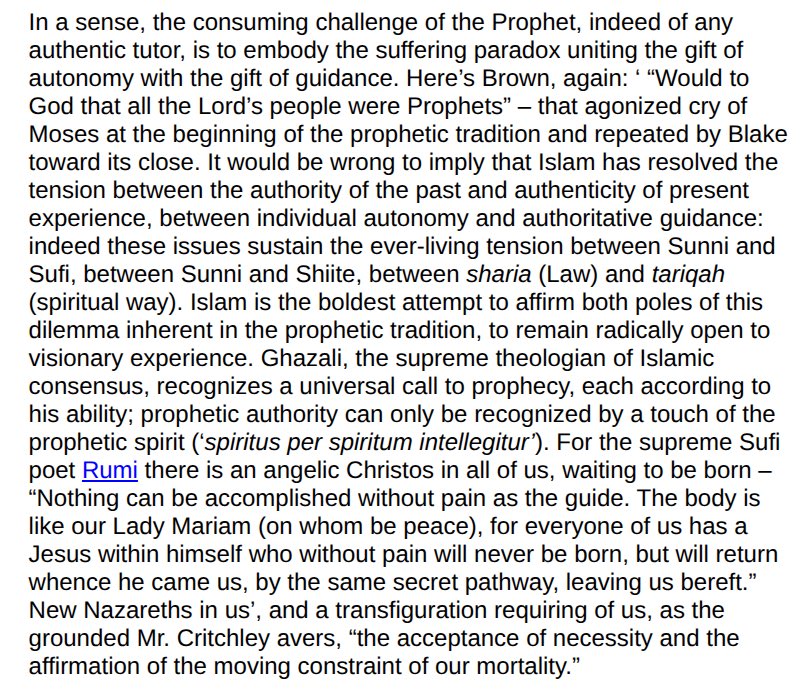
Image description
Extended description
In a sense, the consuming challenge of the Prophet, indeed of any authentic tutor, is to embody the suffering paradox uniting the gift of autonomy with the gift of guidance. Here’s Brown, again: ‘ “Would to God that all the Lord’s people were Prophets” – that agonized cry of Moses at the beginning of the prophetic tradition and repeated by Blake toward its close. It would be wrong to imply that Islam has resolved the tension between the authority of the past and authenticity of present experience, between individual autonomy and authoritative guidance: indeed these issues sustain the ever-living tension between Sunni and Sufi, between Sunni and Shiite, between sharia (Law) and tariqah (spiritual way). Islam is the boldest attempt to affirm both poles of this dilemma inherent in the prophetic tradition, to remain radically open to visionary experience. Ghazali, the supreme theologian of Islamic consensus, recognizes a universal call to prophecy, each according to his ability; prophetic authority can only be recognized by a touch of the prophetic spirit (‘spiritus per spiritum intellegitur’). For the supreme Sufi poet Rumi there is an angelic Christos in all of us, waiting to be born – “Nothing can be accomplished without pain as the guide. The body is like our Lady Mariam (on whom be peace), for everyone of us has a Jesus within himself who without pain will never be born, but will return whence he came us, by the same secret pathway, leaving us bereft.” New Nazareths in us’, and a transfiguration requiring of us, as the grounded Mr. Critchley avers, “the acceptance of necessity and the affirmation of the moving constraint of our mortality.”
Open original document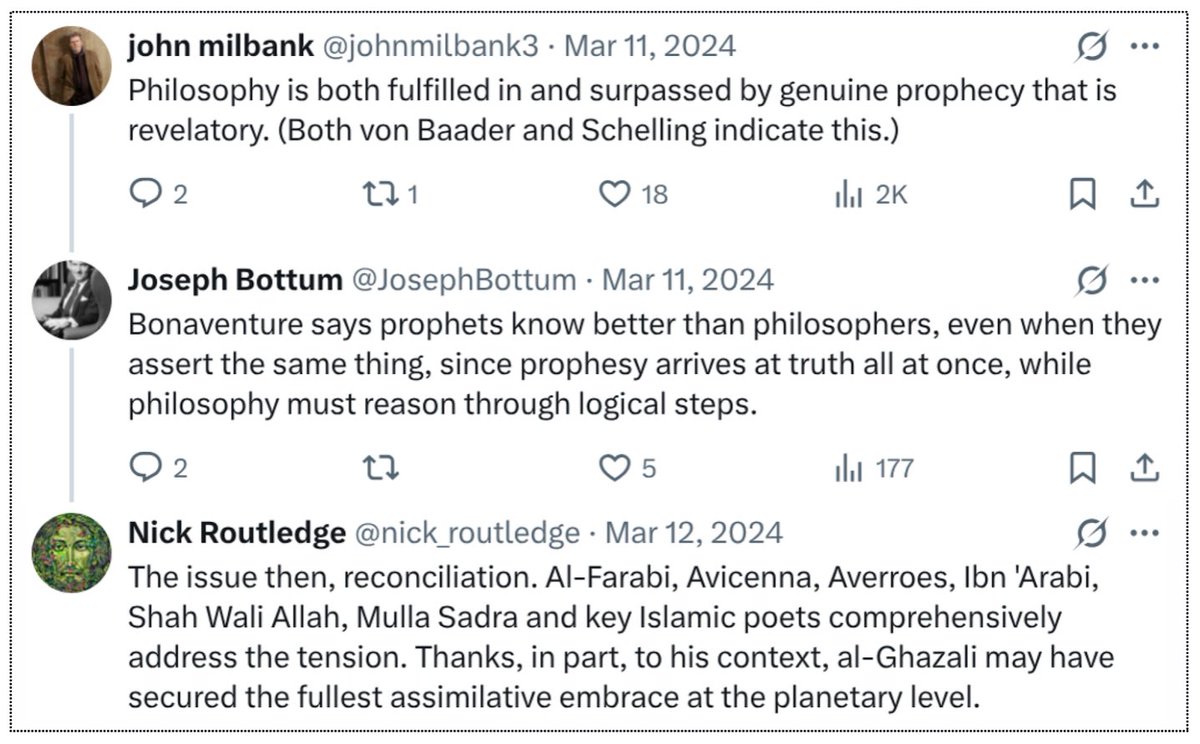
Image description
Original X alt text
Copy of tweet thread here: Philosophy is both fulfilled in and surpassed by genuine prophecy that is revelatory. (Both von Baader and Schelling indicate this.) Bonaventure says prophets know better than philosophers, even when they assert the same thing, since prophesy arrives at truth all at once, while philosophy must reason through logical steps. The issue then, reconciliation. Al-Farabi, Avicenna, Averroes, Ibn 'Arabi, Shah Wali Allah, Mulla Sadra and key Islamic poets comprehensively address the tension. Thanks, in part, to his context, al-Ghazali may have secured the fullest assimilative embrace at the planetary level.
@lukeburgis 3/ This is why “just change the theology” is naive and “theology doesn’t matter” is equally so. The gods we confess are late justifications until they become the only language in which a community can hear judgment on its idols and imagine an order beyond its interests.
View this post’s context →