
RT @nick_routledge: @pauljpastor We were all acorn eaters once.' Thought perhaps you may appreciate this illuminated manuscript: 'Opening The Oak Door'—my 2005 horticultural portrait of Q. garryana as totemic PNW archetype.
@Plough 2/ Hesse referred to trees as "the most penetrating of preachers." Where the Oak, for one, is traditionally the Tree of Shepherds, Endurance and Triumph, modern ecological science helps clarify why the 'holy ancient character' specifically associated with the species makes sense.
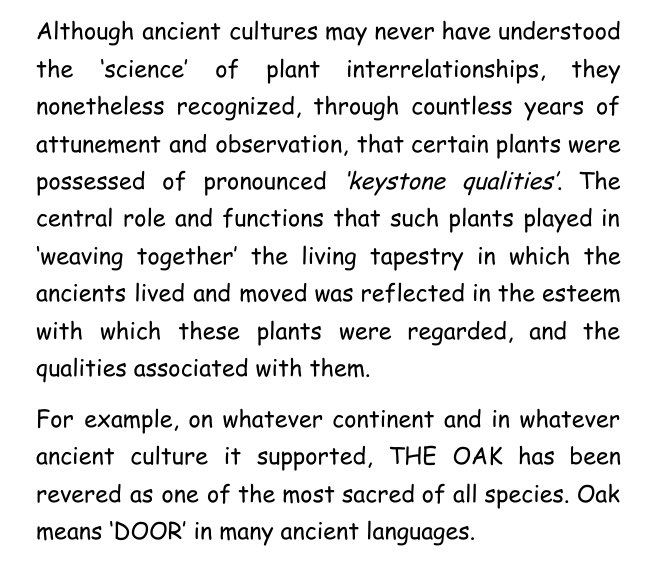
Image description
Original X alt text
Although ancient cultures may never have understood the ‘science’ of plant interrelationships, they nonetheless recognized, through countless years of attunement and observation, that certain plants were possessed of pronounced ‘keystone qualities’. The central role and functions that such plants played in ‘weaving together’ the living tapestry in which the ancients lived and moved was reflected in the esteem with which these plants were regarded, and the qualities associated with them. For example, on whatever continent and in whatever ancient culture it supported, THE OAK has been revered as one of the most sacred of all species. Oak means ‘DOOR’ in many ancient languages.