
@NatureSchoolSU 25 years ago! You're an ace historian, dear brother. I recall that kid's gardening workshop, too. Big day in my life. It taught me I wasn't the person I thought I was, and that I had to change completely. Goodness, the hustle involved in organizing those FNL freeschool schedules!
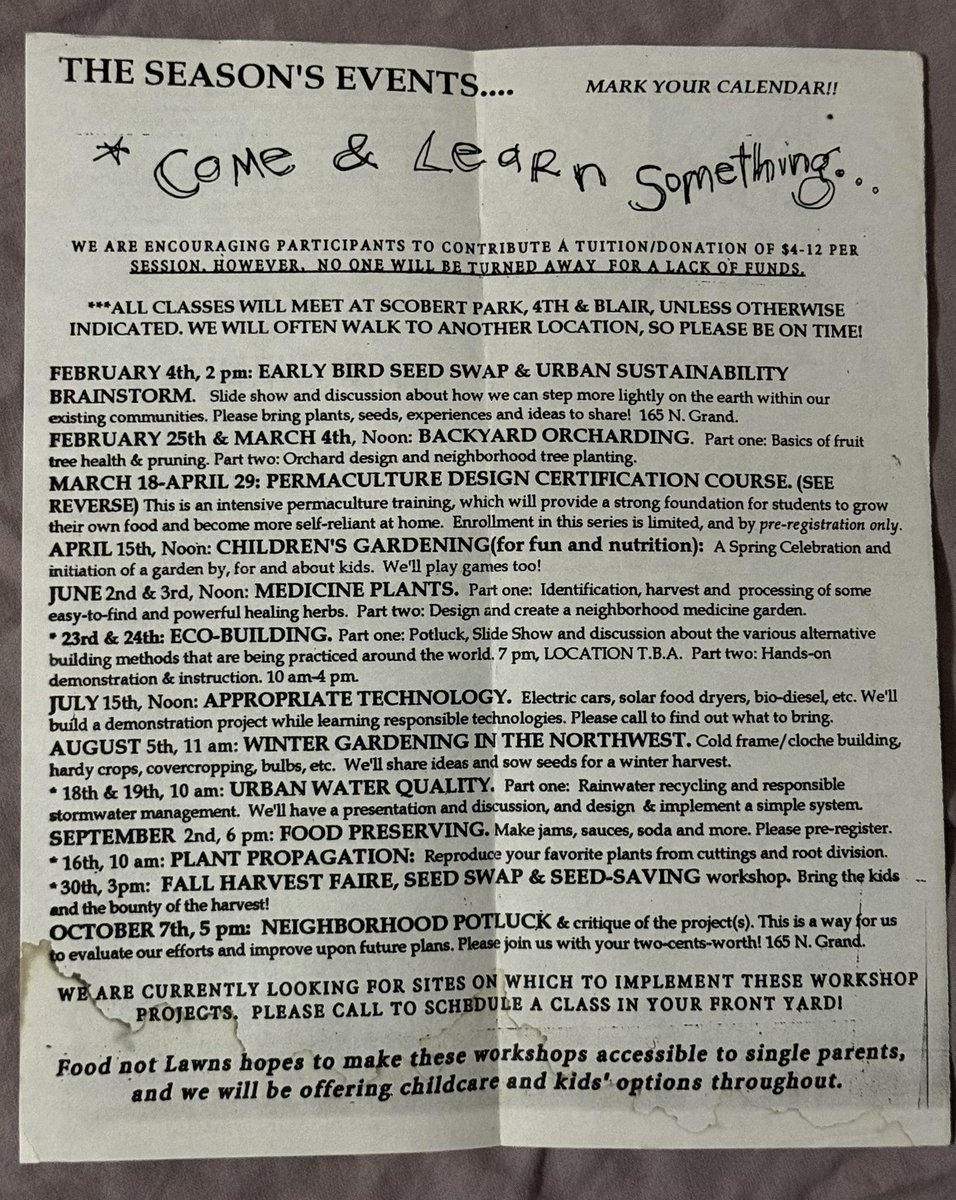
Image description
Original X alt text
Flyer advertising community sustainability events curated by the Food Not Lawns collective in the Whiteaker neighborhood, Eugene, OR, circa 2000.
2/ Centered among low-income folk (apartment dwellers, mostly) in our city's poorest neighborhood, we took a fiercely creative approach to the serious work of growing food and basic medicines, wedding leading-edge, ecological-design practices to dynamic community involvement.
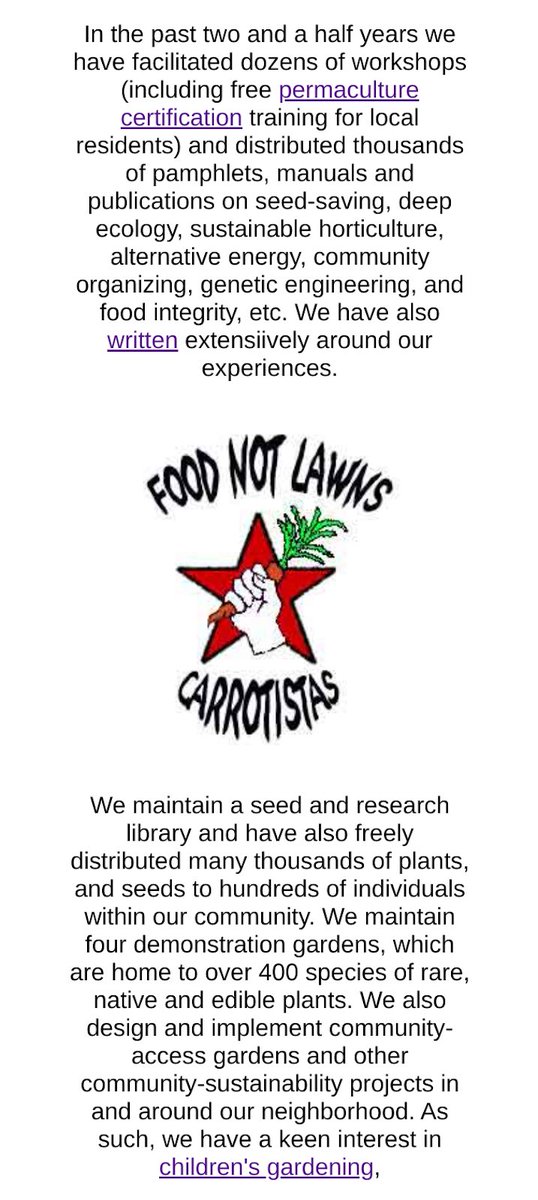
Image description
Original X alt text
Excerpt from the FNL 'home page' here: bugs.scribble.com/ In the past two and a half years we have facilitated dozens of workshops (including free permaculture certification training for local residents) and distributed thousands of pamphlets, manuals and publications on seed-saving, deep ecology, sustainable horticulture, alternative energy, community organizing, genetic engineering, and food integrity, etc. We have also written extensiively around our experiences. [FNL graphic] We maintain a seed and research library and have also freely distributed many thousands of plants, and seeds to hundreds of individuals within our community. We maintain four demonstration gardens, which are home to over 400 species of rare, native and edible plants. We also design and implement community-access gardens and other community-sustainability projects in and around our neighborhood. As such, we have a keen interest in children's gardening,
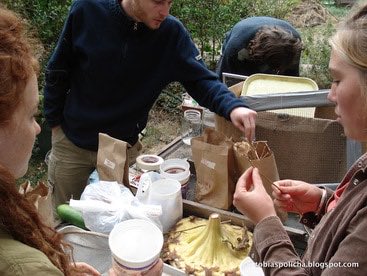
Image description
Original X alt text
Community members chatting over seed at an FNL event.
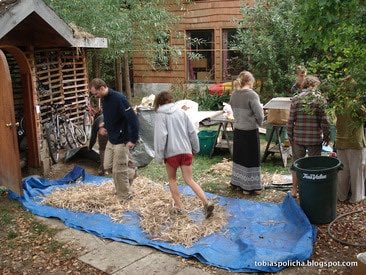
Image description
Original X alt text
Community members stomping on dried bean pods on a tarpaulin to separate the bean seeds.
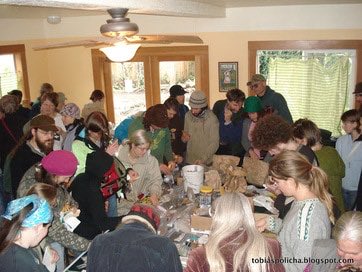
Image description
Original X alt text
An FNL seedswap with a large group tightly packed around a table covered with a diversity of seeds in various bags and containers.