
@PageauJonathan end/ The hidden prophet vanishes not in absence, but in unveiling. When the Real becomes visible to all, concealment ends—of the truth, and of the one who held its flame. This is not disappearance, but consummation. The eschaton made manifest. The Kingdom, at last, living aloud.
2/ The Semitic prophets call it the Day or Hour. A historical upheaval. A moral reckoning. A divine interruption in idolatrous systems. A thickening of contradiction, too searing to endure, too true to ignore. What had been hidden is suddenly seen.
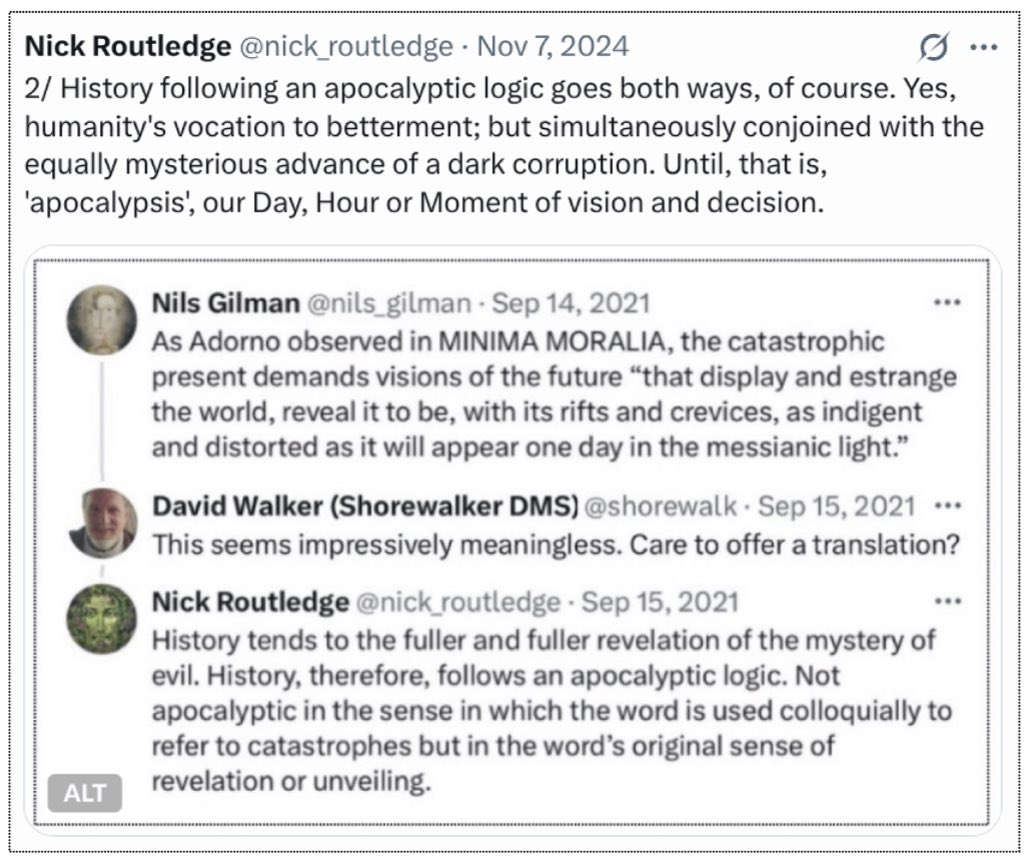
Image description
Original X alt text
2/ History following an apocalyptic logic goes both ways, of course. Yes, humanity's vocation to betterment; but simultaneously conjoined with the equally mysterious advance of a dark corruption. Until, that is, 'apocalypsis', our Day, Hour or Moment of vision and decision. As Adorno observed in MINIMA MORALIA, the catastrophic present demands visions of the future “that display and estrange the world, reveal it to be, with its rifts and crevices, as indigent and distorted as it will appear one day in the messianic light.” This seems impressively meaningless. Care to offer a translation? History tends to the fuller and fuller revelation of the mystery of evil. History, therefore, follows an apocalyptic logic. Not apocalyptic in the sense in which the word is used colloquially to refer to catastrophes but in the word’s original sense of revelation or unveiling.