
@PageauJonathan 7/ Ultimately, the trickster and hidden prophet serve a single eschatological movement: the death and resurrection of the world. In their most eschatologically charged forms, they converge as a simultaneity—a revelatory, 'Eliatic' archetype of rupture and renewal.
@prayerofconsent Across the Semitic Tradition, Moses and Elias side-by-side represent the archetype of revelation and transfiguration as a completeness, presaging a sunburst of trans-cultural integration at the planetary level and the coherence and fulfillment of God's redemptive work on Earth.
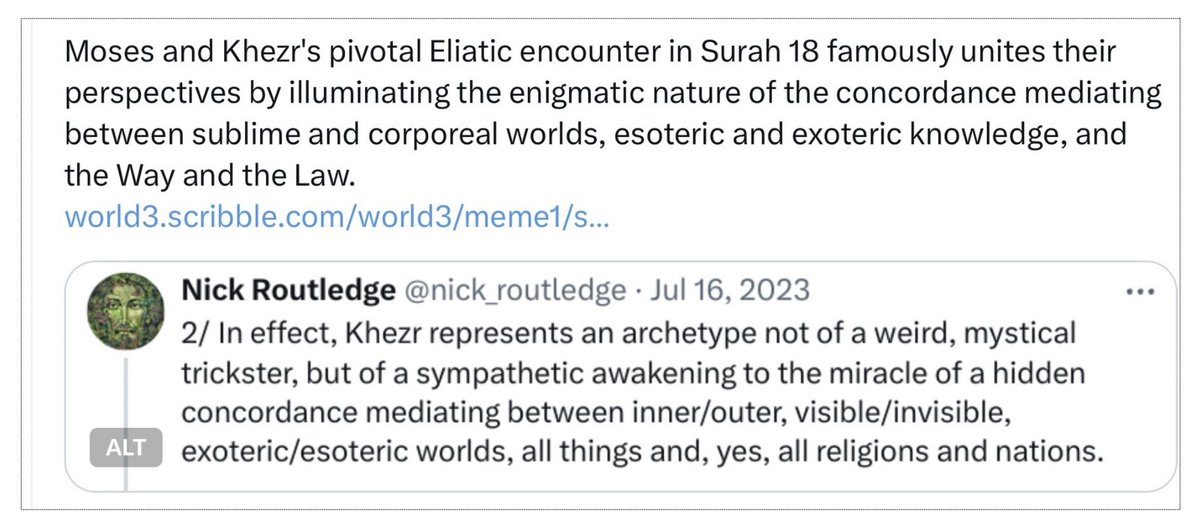
Image description
Original X alt text
Copy of tweet here: Moses and Khezr's pivotal Eliatic encounter in Surah 18 famously unites their perspectives by illuminating the enigmatic nature of the concordance mediating between sublime and corporeal worlds, esoteric and exoteric knowledge, and the Way and the Law. Image of tweet: 2/ In effect, Khezr represents an archetype not of a weird, mystical trickster, but of a sympathetic awakening to the miracle of a hidden concordance mediating between inner/outer, visible/invisible, exoteric/esoteric worlds, all things and, yes, all religions and nations.