
@TaraAnnThieke Notably, the QT below emerged from a thread sparked by a leading agro-biodiversity voice reflecting on the impact of medieval monasteries. Whatever form it takes, the need for a bio-cultural infrastructure of hospitality seems increasingly clear. (Video, Oregon, 12/23)
@AgroBioDiverse 1/2 Fwiw, the Catholic social activist Peter Maurin ("The future of the Church is on the land.") posited the creation of 'agronomic universities' analogous to the lonely fortified monasteries of the Dark Ages, little arks floating and keeping the adventure in consciousness alive.
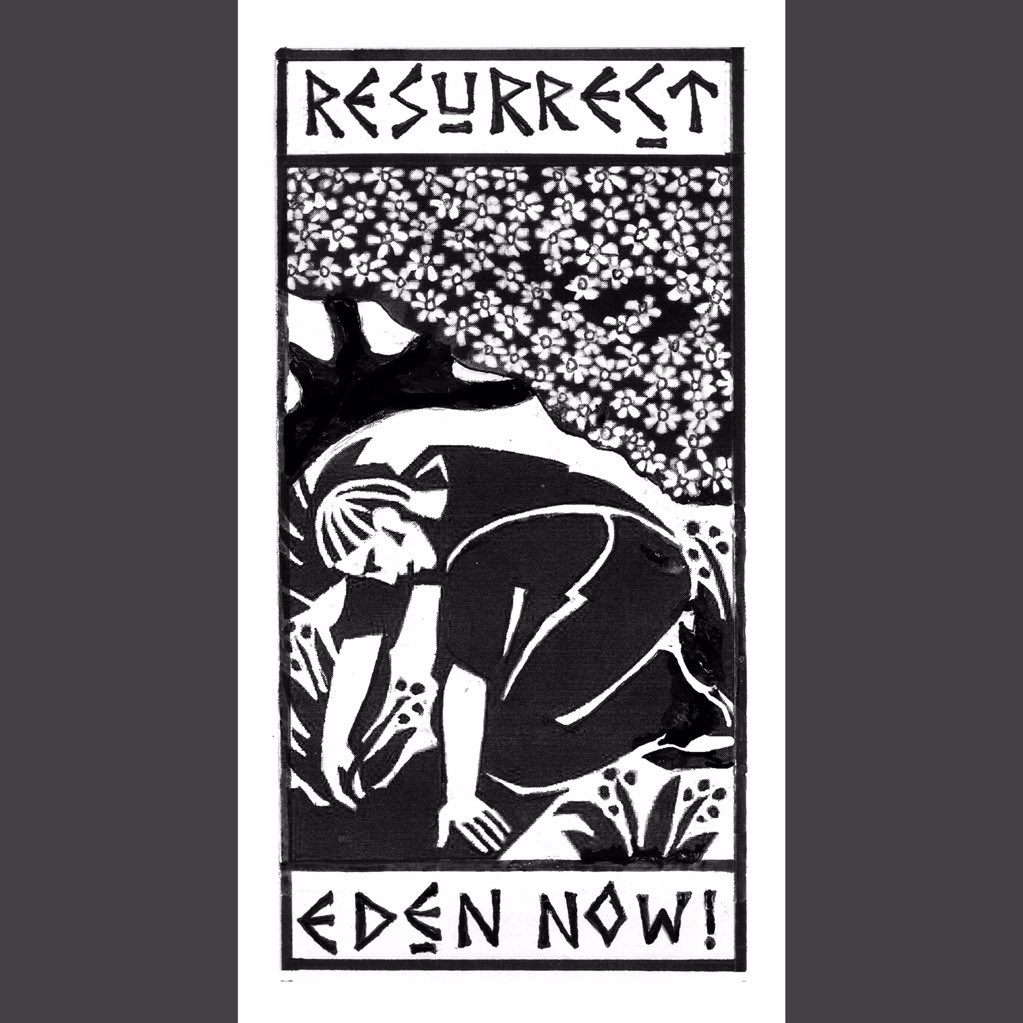
Image description
Original X alt text
Collage portrait, as I recall. Of monastic on his knees, gardening, after Catholic Worker artist Ade Bethune, with calligraphy, 'Resurrect Eden Now!' Video: Ink on paper collage of sower scattering seeds, beneath a dove of peace, after Catholic Worker artist Ade Bethune, with calligraphy: "Resurrect Eden Now!"