
RT @nick_routledge: @Englishomestead Our primary Fava landrace, hereabouts? 20 years ago, I grabbed the originating population (score!) from a 5 gal. bucket in the personal garden of Ianto Evans, the Welsh transplant who founded The Fava Project and bred 'Aprovecho Select'. Further adaptation continues, of course.
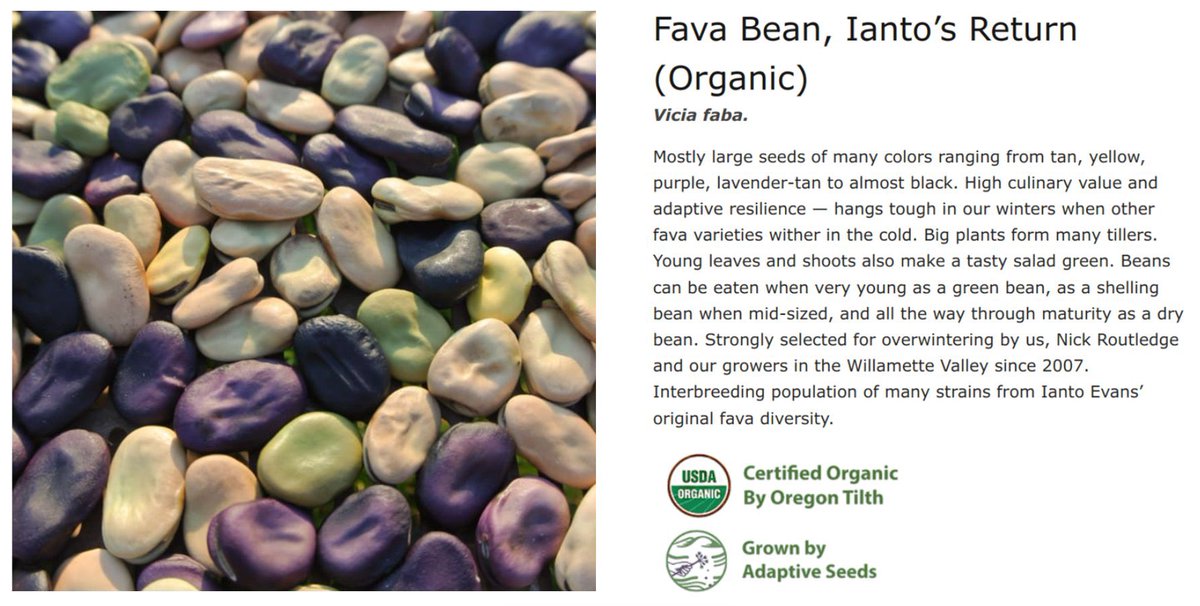
Image description
Original X alt text
Copy of web page here: Photo of highly diverse fava beans (known in the UK as 'broad beans') Fava Bean, Ianto’s Return (Organic) Vicia faba. Mostly large seeds of many colors ranging from tan, yellow, purple, lavender-tan to almost black. High culinary value and adaptive resilience — hangs tough in our winters when other fava varieties wither in the cold. Big plants form many tillers. Young leaves and shoots also make a tasty salad green. Beans can be eaten when very young as a green bean, as a shelling bean when mid-sized, and all the way through maturity as a dry bean. Strongly selected for overwintering by us, Nick Routledge and our growers in the Willamette Valley since 2007. Interbreeding population of many strains from Ianto Evans’ original fava diversity.
@GMWatch 4/ The stove scientists at the Aprovecho Research Center asked for a video for their weekly newsletter, describing what I'm up to in their garden. A brief, rap then, describing holistic approaches to plant-stewardship, in the face of climate chaos. youtu.be/dhQtwvGFjwQ
View this post’s context →