
@BrianZahnd 1/ All was good until his finale articulately dismissing the prophetic eschatology of deep incarnation as a form of otherworldly exile from the foreground we call history. @unitethepoor we categorize such takes as shopworn, smooth-tongued shilly-shallying for the status quo.
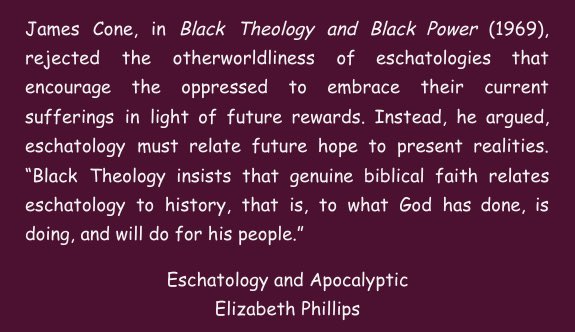
Image description
Original X alt text
James Cone, in Black Theology and Black Power (1969), rejected the otherworldliness of eschatologies that encourage the oppressed to embrace their current sufferings in light of future rewards. Instead, he argued, eschatology must relate future hope to present realities. “Black Theology insists that genuine biblical faith relates eschatology to history, that is, to what God has done, is doing, and will do for his people.” Eschatology and Apocalyptic, Elizabeth Phillips
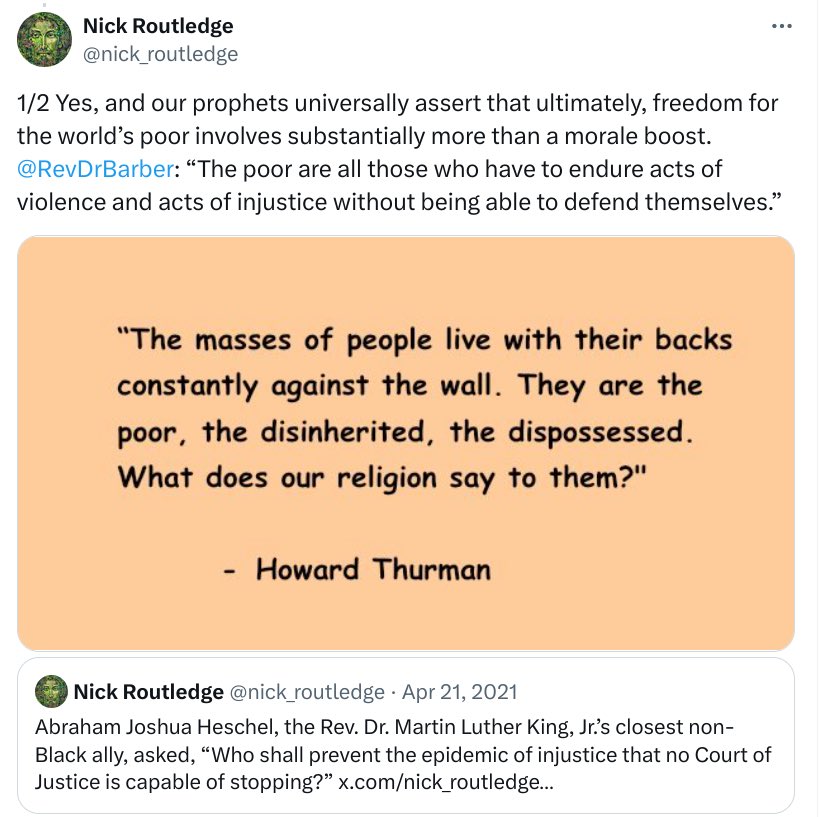
Image description
Original X alt text
1/2 Yes, and our prophets universally assert that ultimately, freedom for the world’s poor involves substantially more than a morale boost. @RevDrBarber: “The poor are all those who have to endure acts of violence and acts of injustice without being able to defend themselves.” "The masses of people live with their backs constantly against the wall. They are the poor, the disinherited, the dispossessed. What does our religion say to them?" - Howard Thurman Abraham Joshua Heschel, the Rev. Dr. Martin Luther King, Jr.’s closest non-Black ally, asked, “Who shall prevent the epidemic of injustice that no Court of Justice is capable of stopping?”
@CACRadicalGrace @blackliturgist Contemplation without action? A fundamental repudiation of reciprocity itself. Existentially-speaking, a defective moral system. Heschel understood: "To do justice is what God demands of every man: it is the supreme commandment, and one that cannot be fulfilled vicariously."
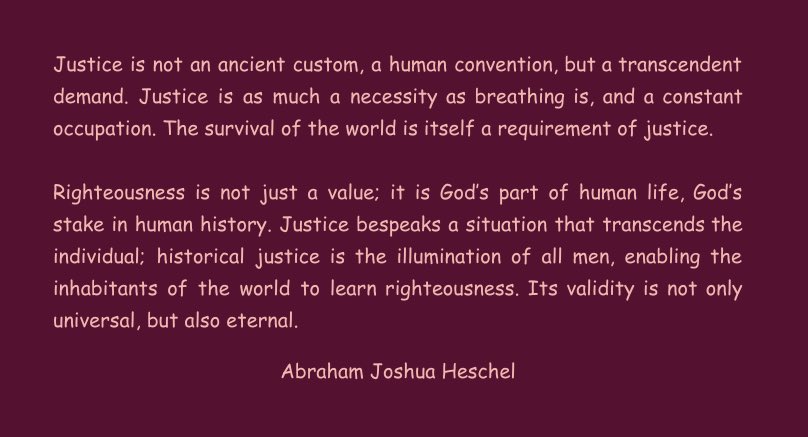
Image description
Original X alt text
Justice is not an ancient custom, a human convention, but a transcendent demand. Justice is as much a necessity as breathing is, and a constant occupation. The survival of the world is itself a requirement of justice. Righteousness is not just a value; it is God’s part of human life, God’s stake in human history. Justice bespeaks a situation that transcends the individual; historical justice is the illumination of all men, enabling the inhabitants of the world to learn righteousness. Its validity is not only universal, but also eternal. Abraham Joshua Heschel
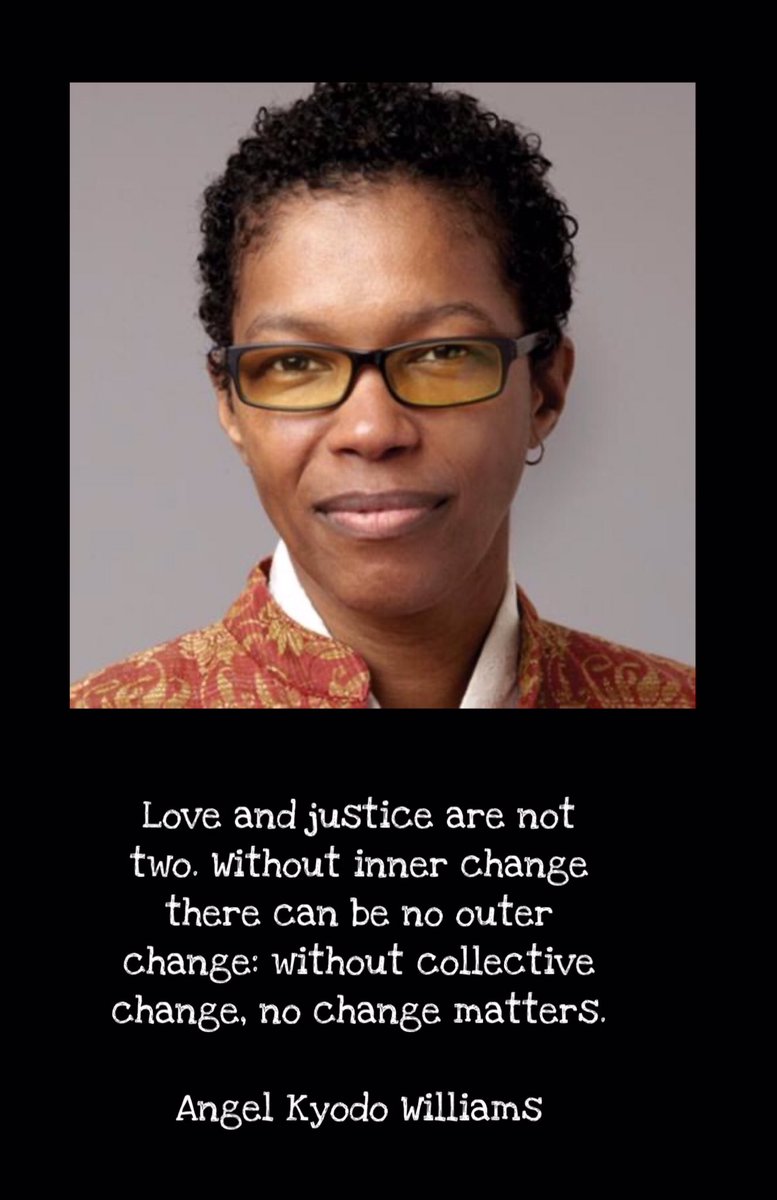
Image description
Original X alt text
Portrait of Oakland-based, Black, Zen Buddhist, Angel Kyoto Williams, with the following text fragment attached. Love and justice are not two. Without inner change there can be no outer change: without collective change, no change matters. Angel Kyodo Williams