@Plough 9/ We play a key, grassroots role identifying and responding to threats. Around, say, the 'apple-plague' anthracnose, we've been ahead of the science-complex in developing a holistic response to this effectively incurable disease so lethal to maritime PNW orchard establishment.
Image description
Original X alt text
Anthracnose has been around for a long time but there's a suspicion the current strain of this fungal pathogen may be 'different'. Our grassroots intelligence gathering suggests this particular iteration worked its way down the coast out of the Fraser Valley in BC. WA is far further along than OR though pockets of intensified infection are spread widely. Trees are particularly susceptible to this extraordinarily infectious disease in their early stages of growth. Girdling young trees, anthracnose will effectively arrest the establishment of well-managed orchards, especially those grown in 'commercial styles', with attrition rates often becoming untenable around, it seems, the 7-year mark. Mature trees without pronounced susceptibility to anthracnose will survive, structurally weakened but are, of course, pronounced vectors for the disease. Once anthracnose is established, it appears ineradicable. In reality, the disease is everywhere. No breeding work has been done for anthracnose and
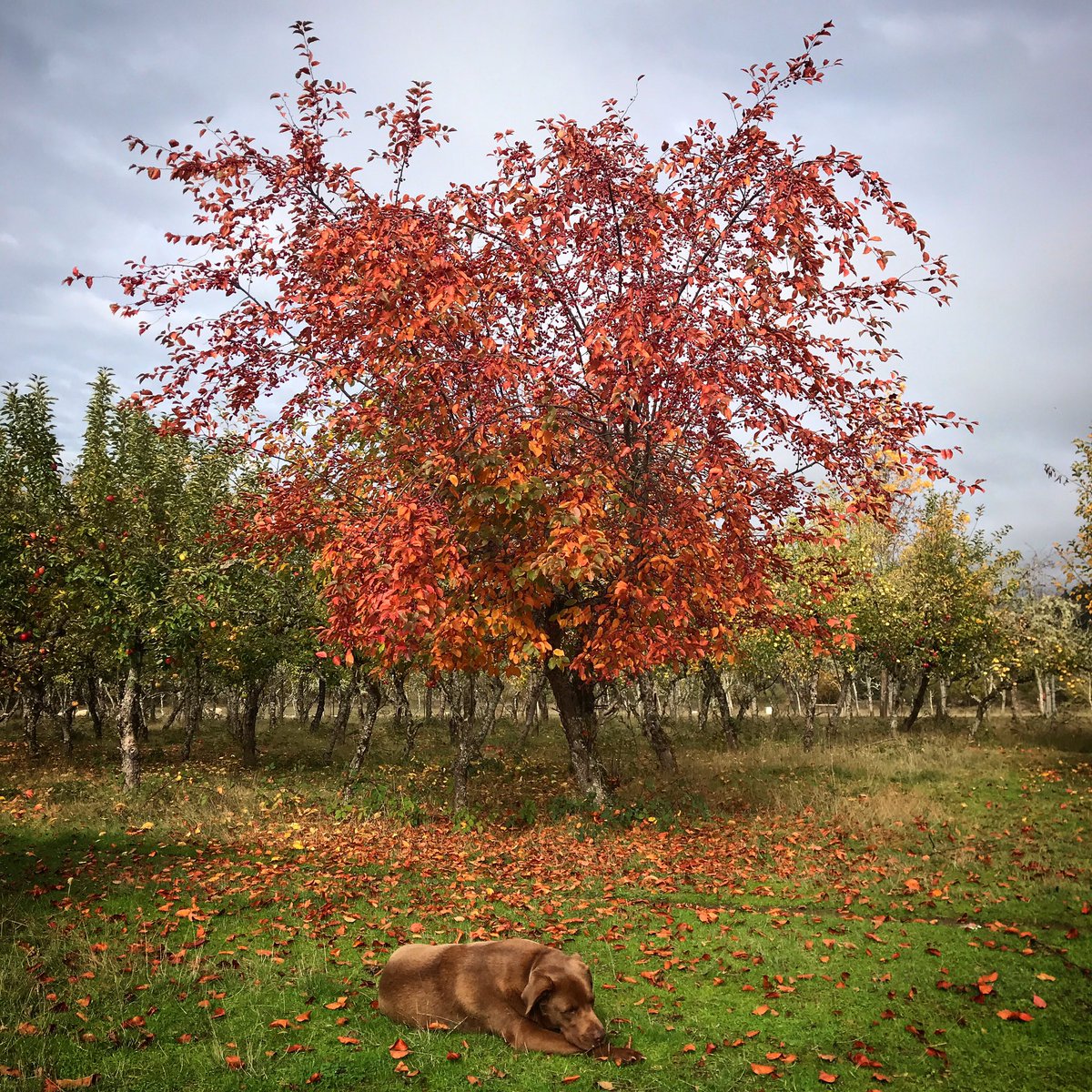
1/ Among more than 4,500 named apple varieties #AgrarianSharingNetwork volunteers have tracked throughout the PNW in recent years, we’ve found only one not susceptible to the crippling disease, Anthracnose (Neofabraea malicorticis). Here it is, in its autumn glory, today.