
Nick Routledge@AgrarianSharing
Reply to @AgrarianSharing

2/ Millennials? The oldest European, as distinct from Asian variety we share, is a 2,000 year-old Roman pear. Don’t be duped. It takes not sentimentality, but substance, to outlast a passing show of cultures, languages and civilizations coming and going through a swinging door.
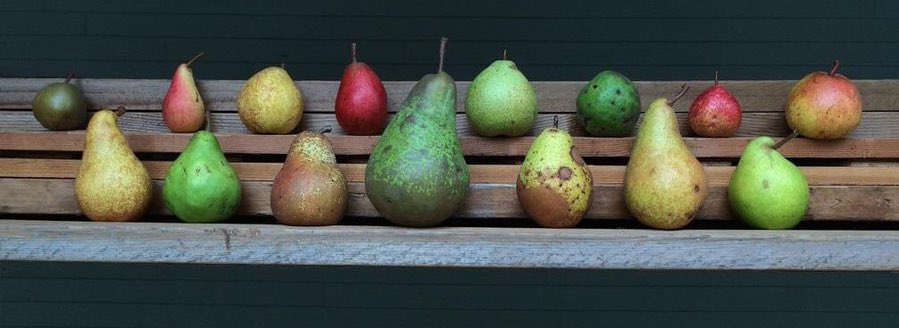
Photograph of pear diversity - a dizzying array of sizes, shapes and colors - represented at one of our fall fruit shows. ‘Pound’ pear is the two pound giant, up-front-and-center.
Image description

Original X alt text

Photograph of pear diversity - a dizzying array of sizes, shapes and colors - represented at one of our fall fruit shows. ‘Pound’ pear is the two pound giant, up-front-and-center.

Quoted or linked post

Nick Routledge@AgrarianSharing · 5 Feb 2024

Out of many thousands of named fruit cultivars we track, only a very small percentage make the final cut. What does it take to make our 'A' list? Holistic staying power, essentially. 'Pound' pear has been getting passed hand-to-hand by plant propagators for some 2,000 years. Why?
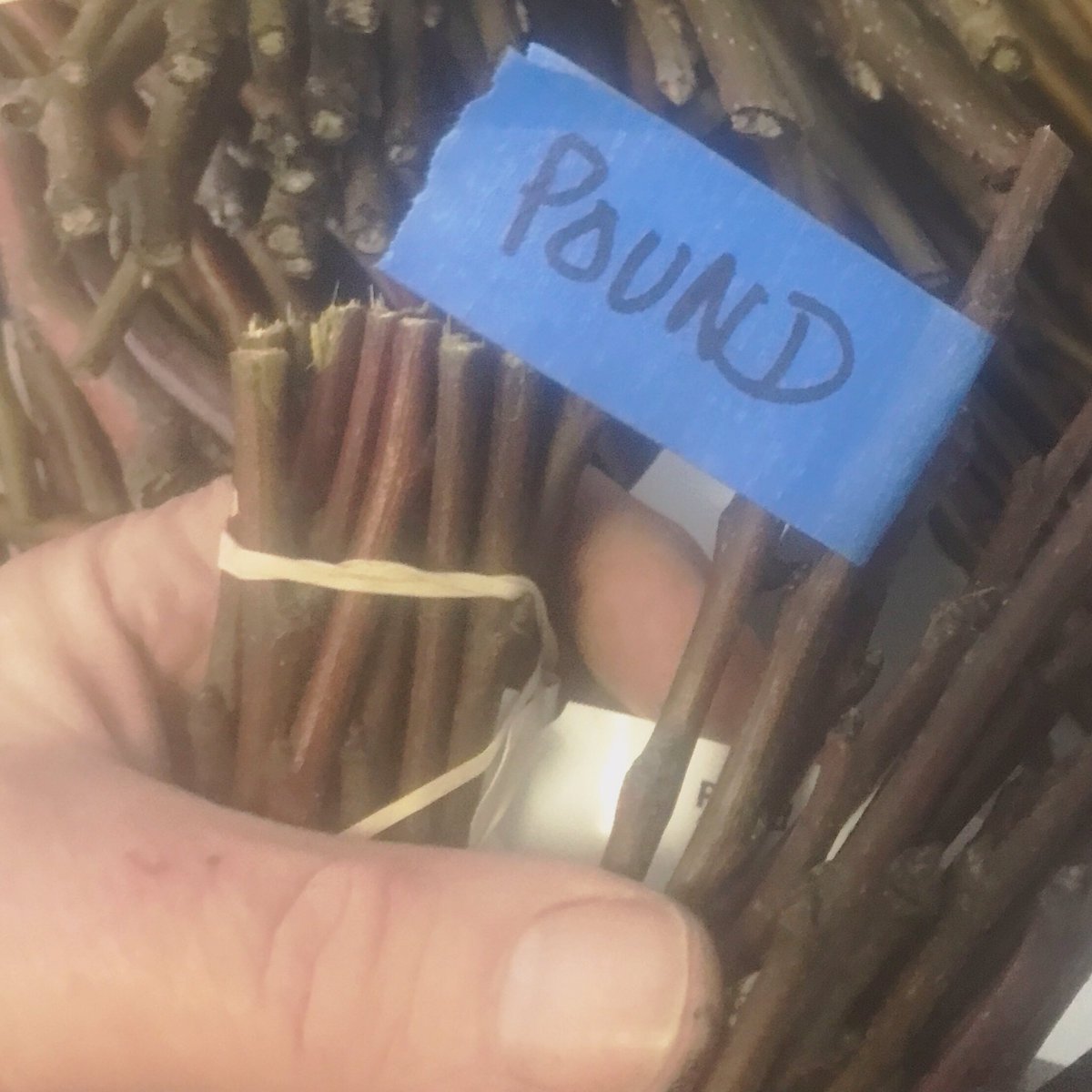
Image with an extended description available below.
Image description

Extended description

Visual reading of the saved image — not recovered original X ALT. A bundle of cuttings held in one hand, with a blue tape label reading ‘POUND’. Uncertainty / limits: The label alone does not establish a cultivar identity beyond the word shown.

Open original document
View this post’s context →

Context in the archive

Quoted byRT @AgrarianSharing: @thebafflermag 1/2  For decades now, our 'applied agrobiodiversity' volunteers have been studying the grammar of the trees at the USDA pear repository, freeing material we’ve identified as ‘future heirlooms', into the commons. Gentle Joseph, retired now, is a much cherished elder in our circle.Quoted byRT @AgrarianSharing: @thebafflermag 1/2  For decades now, our 'applied agrobiodiversity' volunteers have been studying the grammar of the trees at the USDA pear repository, freeing material we’ve identified as ‘future heirlooms', into the commons. Gentle Joseph, retired now, is a much cherished elder in our circle.Quoted by@thebafflermag 1/2  For decades now, our 'applied agrobiodiversity' volunteers have been studying the grammar of the trees at the USDA pear repository, freeing material we’ve identified as ‘future heirlooms', into the commons. Gentle Joseph, retired now, is a much cherished elder in our circle.Quoted byRT @nick_routledge: A distributed fellowship—lay fruit enthusiasts and professional ag scientists—hones our sense of which pear varieties, among the 1,000 we track in field and kitchen, are worth carrying forward in @AgrarianSharing's applied agrobiodiversity work. Each spring, we adjust the target.Quoted byA distributed fellowship—lay fruit enthusiasts and professional ag scientists—hones our sense of which pear varieties, among the 1,000 we track in field and kitchen, are worth carrying forward in @AgrarianSharing's applied agrobiodiversity work. Each spring, we adjust the target.Quoted byRT @nick_routledge: @AgrarianSharing @BarMas Here, a pear slice from a 2015 event. 'Pound', the 2lb giant (video monograph, below) is, sadly, the only warden type I know of to make it Stateside. Always a thrill, finding it in abandoned homesteads deep in the woods. Me, I hold out hopes for a warden popularity resurgence!Quoted by@AgrarianSharing @BarMas Here, a pear slice from a 2015 event. 'Pound', the 2lb giant (video monograph, below) is, sadly, the only warden type I know of to make it Stateside. Always a thrill, finding it in abandoned homesteads deep in the woods. Me, I hold out hopes for a warden popularity resurgence!