
@BarMas TY. Perhaps we've been harvesting it too late. Yup, in the gorgeousness stakes, almost without compare. Then again, has Ayers, an American, made it over? Words n piccies don't come close to catching the sublimity of its rose-tint over golden russet. A superb, all-rounder, too.
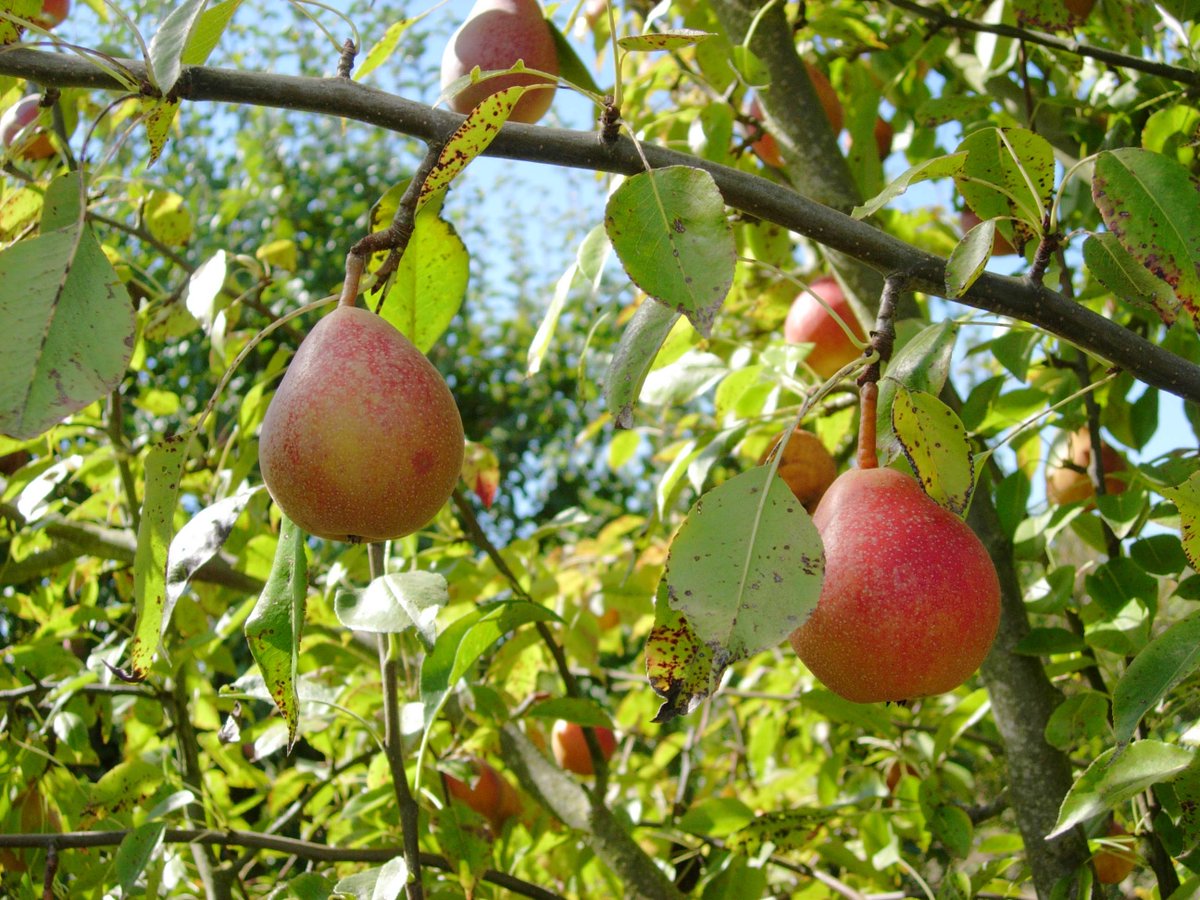
Image description
Original X alt text
Photo of Ayers pears at the USDA pear repository in Corvallis, OR.
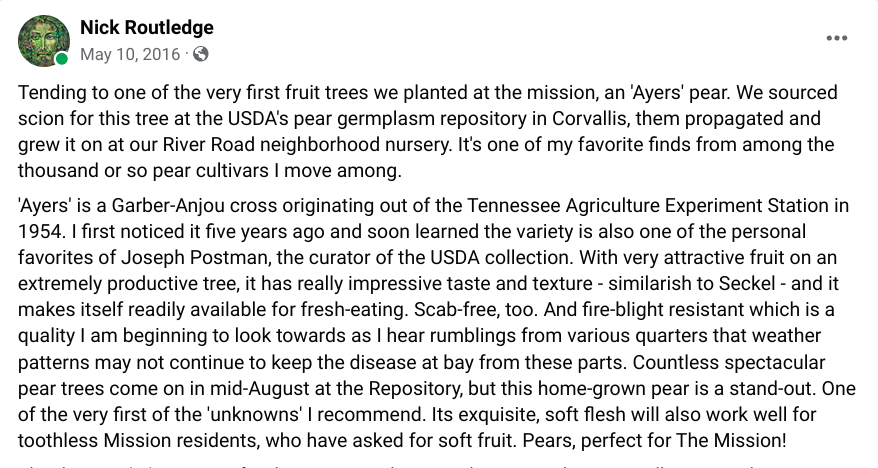
Image description
Original X alt text
We sourced scion for this tree at the USDA's pear germplasm repository in Corvallis. It's one of my favorite finds from among the thousand or so pear cultivars I move among. 'Ayers' is a Garber-Anjou cross originating out of the Tennessee Agriculture Experiment Station in 1954. I first noticed it five years ago and soon learned the variety is also one of the personal favorites of Joseph Postman, the curator of the USDA collection. With very attractive fruit on an extremely productive tree, it has really impressive taste and texture - similarish to Seckel - and it makes itself readily available for fresh-eating. Scab-free, too. And fire-blight resistant. Countless spectacular pear trees come on in mid-August at the Repository, but this home-grown pear is a stand-out. One of the very first of the 'unknowns' I recommend.