
RT @AgrarianSharing: @IrelandSeedSov To prove the point, here's how the ASN Seed Increase Initiative is adapting/evolving the population Chris describes, in Oregon just now. We're growing it out mid-state to take a looksee, and simultaneously managing a stewarded, isolated, seed increase, at scale, in S. Oregon.
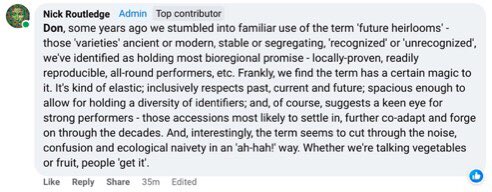
Image description
Original X alt text
Comment on Facebook post here: Nick Routledge Admin Top contributor Don, some years ago we stumbled into familiar use of the term 'future heirlooms' - those 'varieties' ancient or modern, stable or segregating, 'recognized' or 'unrecognized', we've identified as holding most bioregional promise - locally-proven, readily reproducible, all-round performers, etc. Frankly, we find the term has a certain magic to it. It's kind of elastic; inclusively respects past, current and future; spacious enough to allow for holding a diversity of identifiers; and, of course, suggests a keen eye for strong performers - those accessions most likely to settle in, further co-adapt and forge on through the decades. And, interestingly, the term seems to cut through the noise, confusion and ecological naivety in an 'ah-hah!' way. Whether we're talking vegetables or fruit, people 'get it'.
"Both the gaze that sees and the object that is seen construct themselves simultaneously in the one act of vision. So much depends then on how we see things." - John O'Donohue. Collards, then, as a poetics of becoming.