
Friends since 2018, I've so treasured my relationship with the Palestinian Heirloom Seed Library, and feel greatly honored to be part of a network of American growers currently helping to reinvigorate 'Jadu'i', the legendary watermelon variety from Jenin. facebook.com/groups/agrariansharingnetwork/posts/3505938002988599/
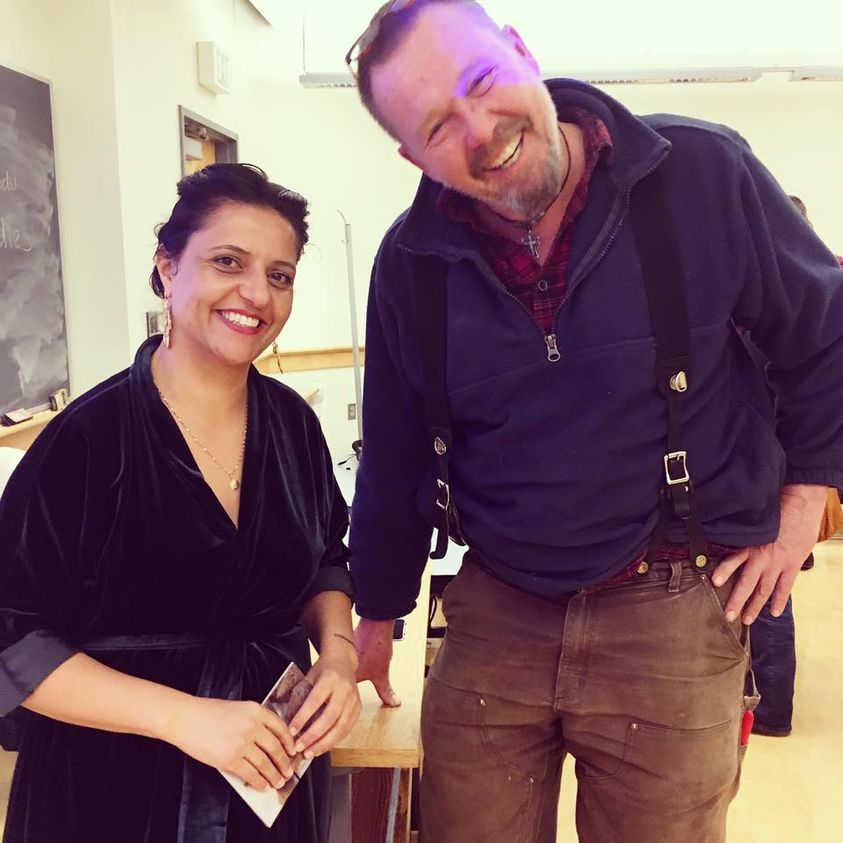
Image description
Original X alt text
Jadu'i seed originally came Stateside with Vivien Sansour of the Palestine Heirloom Seed Library. That's her, with me, in 2018, in Eugene, learning of her work which, of course, includes the unique bio-cultural challenges and opportunities of seed sovereignty under military occupation. The watermelon is of great significance to many Palestinian people. "Known for its disease resistance and adaptation to the microclimate," Vivien writes, "Jadu’i watermelon fields were symbolic of Palestinian farmers’ lived experiences: Palestinian women gave birth in the melon fields; many sought refuge in the fields during the war; and many more remember the times when the watermelons were stored under beds to eat during the winter. This watermelon has stayed carved in peoples’ memories until this day. There is no one from Jenin who would not have a story to share from their parents or their own experience of a once loved and enjoyed melon that shaped much of the culture at some point.”
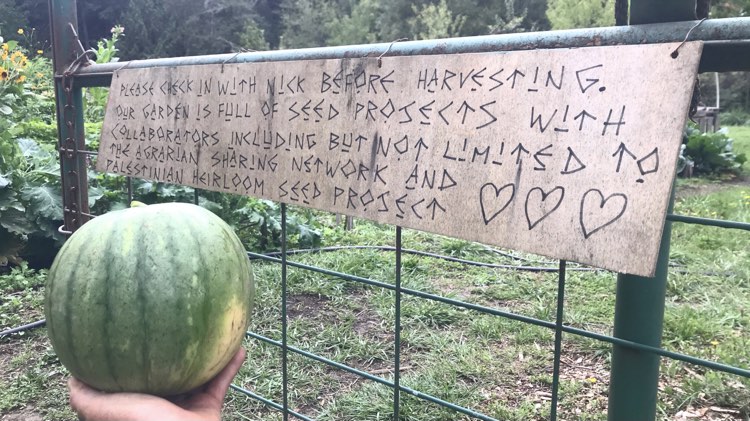
Image description
Original X alt text
Along with modern agriculture trends, the disruption of Palestinian lifeways have left traditional Palestinian agriculture hanging by a thread. When Vivien started looking for Jadu'i, she was told she was looking for a dinosaur. But she persisted and, finally, she found an old farmer who said he had a handful of old seeds in a drawer. Vivien has had many people grow out this watermelon from those original seeds, but no one has yet managed to achieve fruits close to the size this watermelon once attained. Of late, the Experimental Farm Network has increased the material Stateside, calling seeds from the increase, 'Small Jadu'i', and are making them available in the hope that by saving and sharing seeds from only the largest fruits each year, we may eventually be able to fully resurrect this otherwise lost variety in close to its original form and be able to return something close to the original Jadu'i to Palestinian farmers so it can be restored to its singular place in their culture.