
@bakerjjw @BrianZahnd @BKristofferson Exquisitely stated, John. Experiencing violence as ours to own and end? A perspective transcending mortality is essential, some aver; others, that sense, means and effect positively converge in the divine light of Redemptive promise; the messianic sunburst, manifest. Prov. 10:25
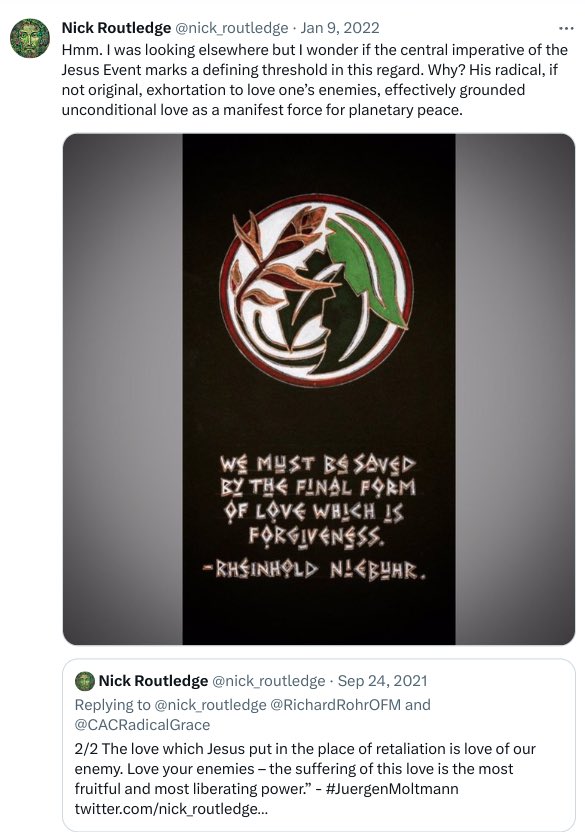
Image description
Original X alt text
Copy of tweet and quote tweet beginning here: Hmm. I was looking elsewhere but I wonder if the central imperative of the Jesus Event marks a defining threshold in this regard. Why? His radical, if not original, exhortation to love one’s enemies, effectively grounded unconditional love as a manifest force for planetary peace. Image: abstract painting of plants with calligraphy. We must be saved by the final form of love which is forgiveness. Rheinhold Niebhur. Quote Tweet 2/2 The love which Jesus put in the place of retaliation is love of our enemy. Love your enemies – the suffering of this love is the most fruitful and most liberating power.” - #JuergenMoltmann
@MassimoFaggioli @commonwealmag @UniteThePoor 2/ @RichardRohrOFM “I am told that the Sermon on the Mount—the essence of Jesus’ teaching—is the least quoted Scripture in official Catholic Church documents.” Brown: “The thing then, is not to abolish war, but to find the true war.” Act as if the reign of God is here. Lk. 17:21
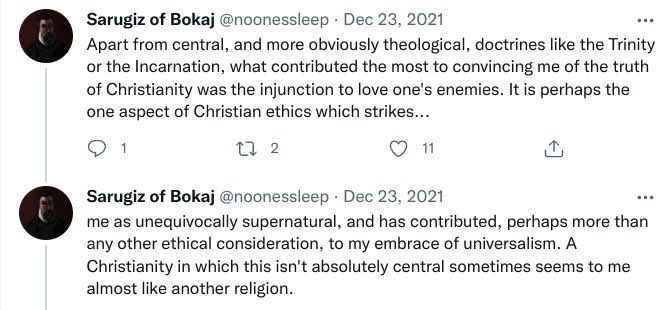
Image description
Original X alt text
Two tweet excerpt from a thread: ʿAṭṭār Dec 23, 202 Apart from central, and more obviously theological, doctrines like the Trinity or the Incarnation, what contributed the most to convincing me of the truth of Christianity was the injunction to love one's enemies. It is perhaps the one aspect of Christian ethics which strikes… ʿAṭṭār me as unequivocally supernatural, and has contributed, perhaps more than any other ethical consideration, to my embrace of universalism. A Christianity in which this isn't absolutely central sometimes seems to me almost like another religion.