
@NealSpackman W. Berry: "You cannot save the land apart from the people or the people apart from the land.” Functional regenerative design is always, ultimately, socially integrative, too. Here, for example, addressing a devastated population and devastated landscape in a single, unifying act.
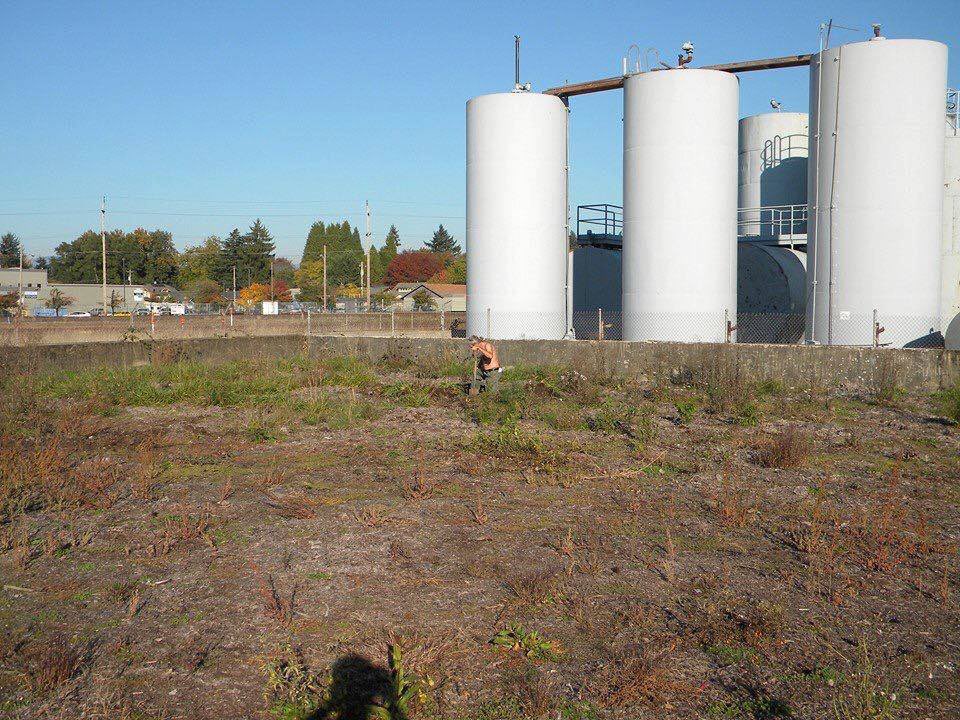
Image description
Original X alt text
Image of the heavy use industrial site as we first get to it. Ron digs a hole at the devastated industrial site, formerly a Texaco oil storage facility, and empty but for a primitive shelter set aside for smokers. The ‘soil’ of our new garden comprised almost two feet of gravel compacted by decades of heavy industrial use, interspersed with plentiful, immense, 18” thick concrete slabs, once used as foundations for supersized oil holding-tanks, just like the ones still in use by the business next door. Ron, the first concrete-cutting specialist we invited to consult with us, dug a hole: ‘Wow,’ he said, ‘That’s some concrete you’ve got there,’ and advised us to ‘speak to the folks who take out dams.’ We did, confirming that the costs and logistics associated with returning the site to a somewhat naturalized foundation to work with, was simply impractical. What to do, then? How to grow a garden in a context as tough as it gets?
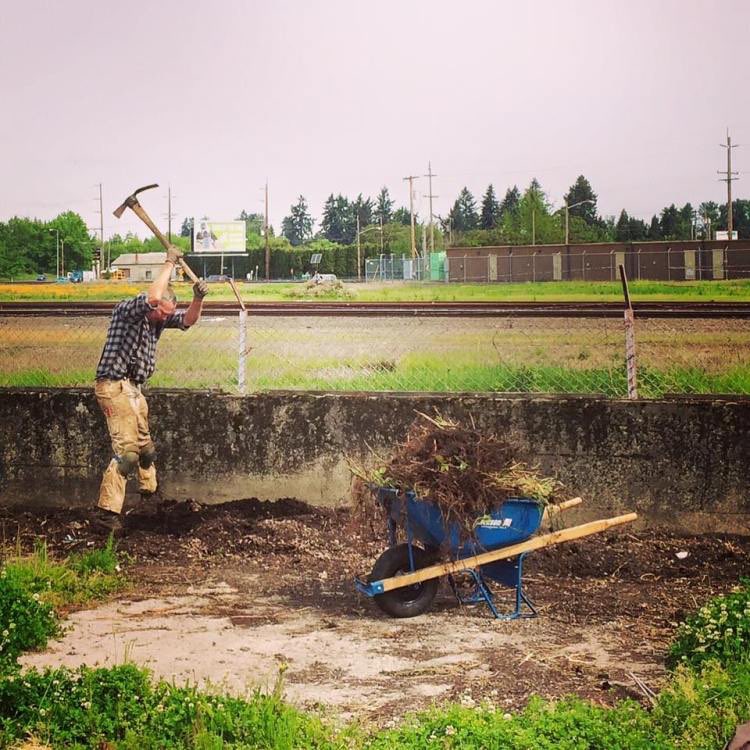
Image description
Original X alt text
Nick swinging a lick ace between the large, concrete pads formerly used to support huge oil-storage tanks.
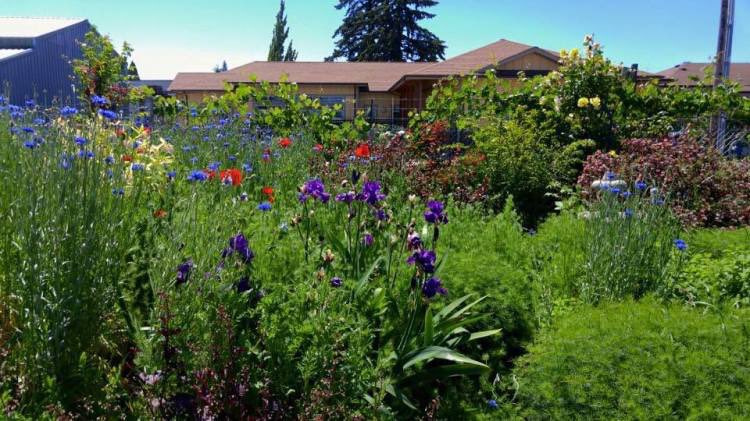
Image description
Original X alt text
Image of a dense bank of flowers, planted by women volunteers. The landscape transforms into a beautiful garden.
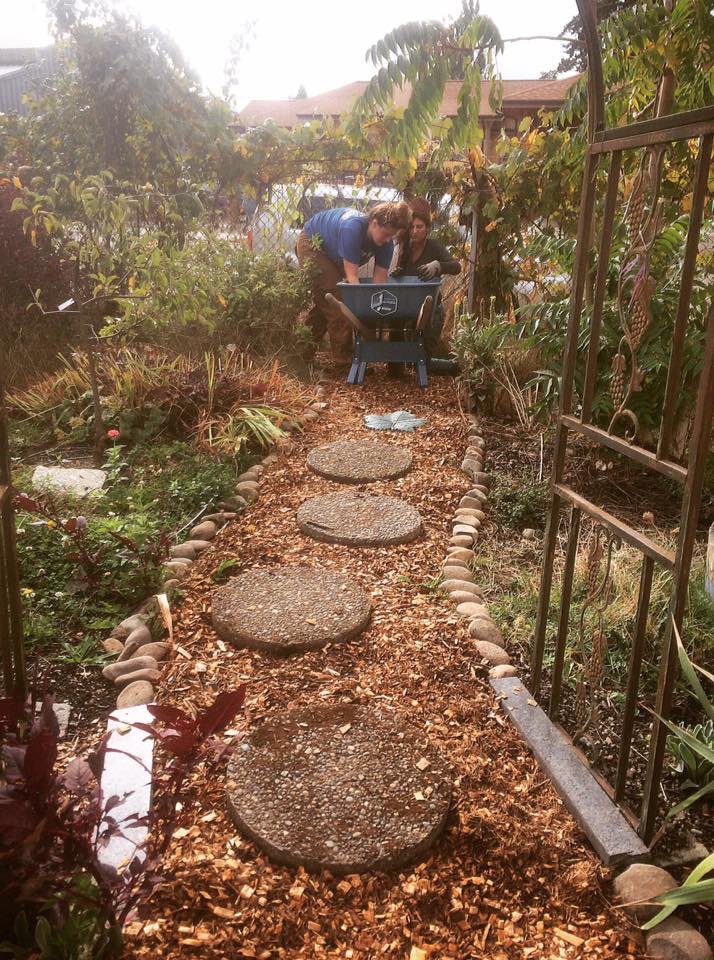
Image description
Original X alt text
Volunteers lay a path of stepping stones through our burgeoning garden.
#earthday2020 @ecosocialphysician Beauty twice-realized. A brief photo-essay describing my multi-year effort to transform a site devastated by decades of heavy industrial use into a Sanctuary Garden for homeless women in Eugene, OR. @unitethepoor sanctuarygarden.home.blog/
View this post’s context →