
RT @nick_routledge: @MaxJerneck @nils_gilman 1/ Illich, no fool, called the Jesus Event a 'spiritual anarchist', though, as Wittgenstein names it, the limits of our language are the limits of our world. And the limit of our vision, too? Ultimately, the nation state amounts to a functional rationalization of hatred and pain.
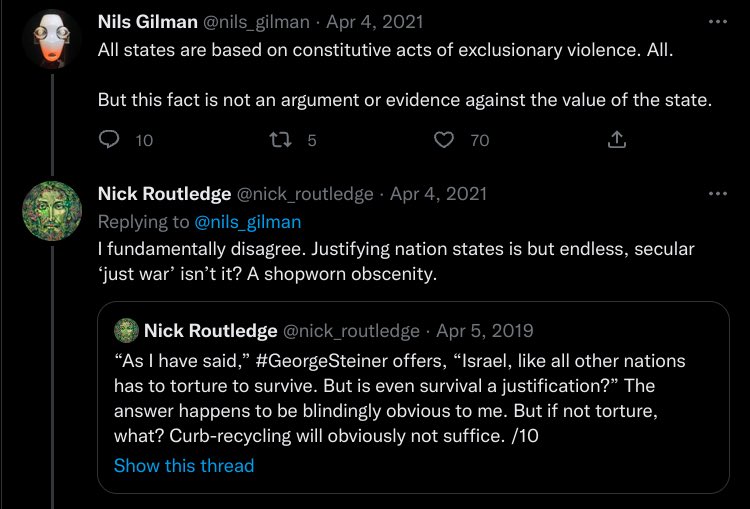
Image description
Original X alt text
Copy of tweet thread: Nils Gilman All states are based on constitutive acts of exclusionary violence. All. But this fact is not an argument or evidence against the value of the state. Nick Routledge I fundamentally disagree. Justifying nation states is but endless, secular ‘just war’ isn’t it? A shopworn obscenity. Quote Tweet Nick Routledge “As I have said,” #GeorgeSteiner offers, “Israel, like all other nations has to torture to survive. But is even survival a justification?” The answer happens to be blindingly obvious to me. But if not torture, what? Curb-recycling will obviously not suffice. /10 Show this thread
@davidrieff @nils_gilman David, hi. Surprised to stumble upon a fundamentally secular community of interest and vernacular addressing "the political and temporal dynamism of eschatology" as it relates to "the possibility of a messianic Politics to Come." Nils' "radical philosophical event" comes to mind.
View this post’s context →