
@ewahlwriting @RossArlenTieken
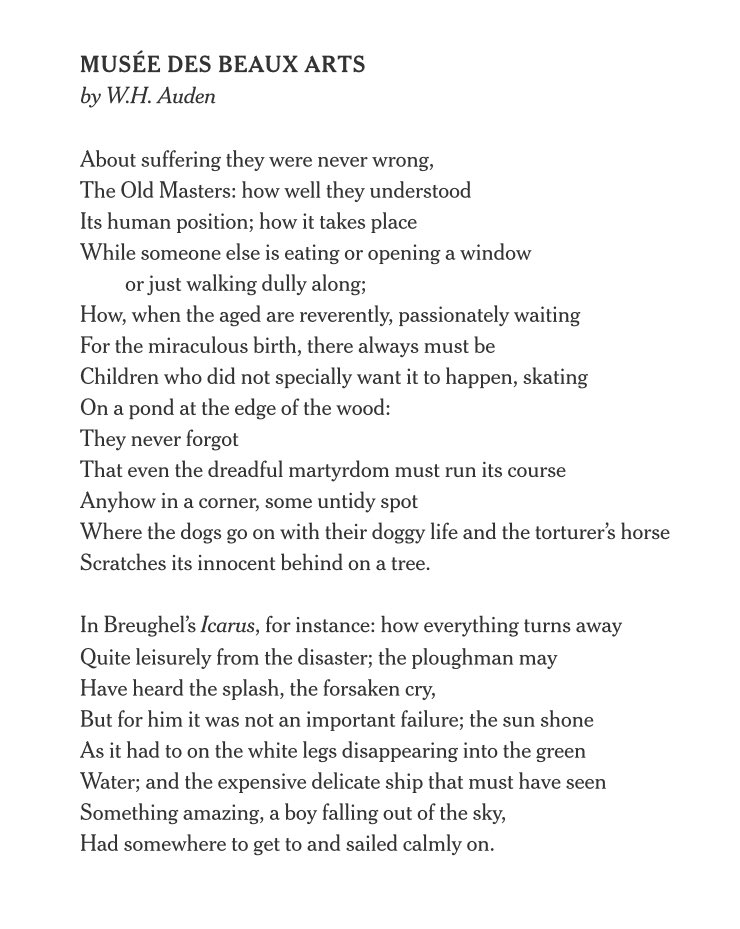
Image description
Original X alt text
Musee des Beaux Arts W. H. Auden About suffering they were never wrong, The old Masters: how well they understood Its human position: how it takes place While someone else is eating or opening a window or just walking dully along; How, when the aged are reverently, passionately waiting For the miraculous birth, there always must be Children who did not specially want it to happen, skating On a pond at the edge of the wood: They never forgot That even the dreadful martyrdom must run its course Anyhow in a corner, some untidy spot Where the dogs go on with their doggy life and the torturer's horse Scratches its innocent behind on a tree. In Breughel's Icarus, for instance: how everything turns away Quite leisurely from the disaster; the ploughman may Have heard the splash, the forsaken cry, But for him it was not an important failure; the sun shone As it had to on the white legs disappearing into the green Water, and the expensive delicate ship that must have seen...
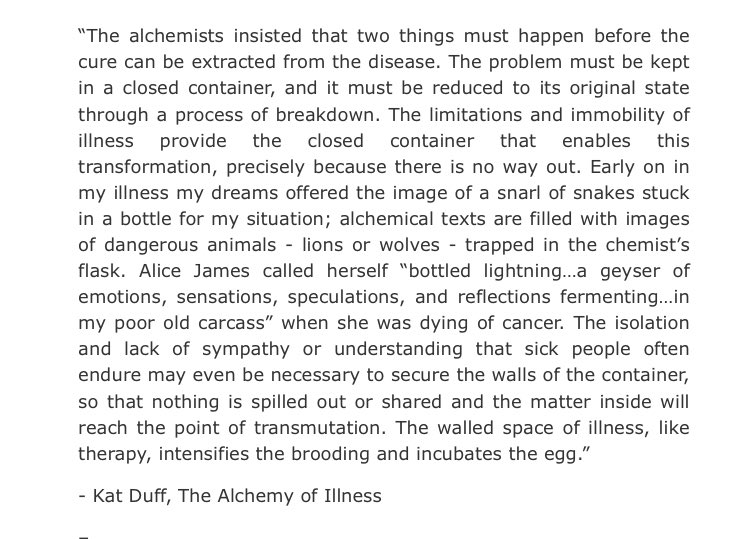
Image description
Original X alt text
The alchemists insisted that two things must happen before the cure can be extracted from the disease. The problem must be kept in a closed container, and it must be reduced to its original state through a process of breakdown. The limitations and immobility of illness provide the closed container that enables this transformation, precisely because there is no way out. Alice James called herself “bottled lightning…a geyser of emotions, sensations, speculations, and reflections fermenting…in my poor old carcass” when she was dying of cancer. The isolation and lack of sympathy or understanding that sick people often endure may even be necessary to secure the walls of the container, so that nothing is spilled out or shared and the matter inside will reach the point of transmutation. The walled space of illness, like therapy, intensifies the brooding and incubates the egg.” - Kat Duff, The Alchemy of Illness