@jesuits_ireland @Pontifex 5/ Illich, as Agamben sees him, was willing to reach judgment - to face a moment of decision - to speak for that messianic perspective that interrupts the endless line of time and history, the moment when historical time, according to St. Paul, implodes into eternity.
Image description
Original X alt text
Another quality of the flesh is that it holds and names the possibility of surprise. Illich all his life said that he hoped for surprises. Already, in his first book, he writes, “Our hope of salvation lies in our being surprised by the Other. Let us learn always to receive further surprises. I decided long ago to hope for surprises until the final act of my life—that is to say, in death itself.” This might at first seem like nothing more than inspirational boilerplate—of course, we all love surprises—but not if one seriously asks, what are the conditions under which surprise occurs? The first and most obvious one is that we cannot be surprised by what we expect. Expectation, however, virtually defines modern existence, and all existence to the extent that people at all times have navigated according to what experience has taught us to expect. Expectation shapes our perceptual habits. Surprise is possible only when expectation loosens its grip.
Image description
Original X alt text
I think surprise in Illich often denotes the messianic. I do not mean that I think it’s a coded reference—a secret sign detectable only by those with the appropriate decoder ring. Surprise is rather the structure of messianic experience. In his Parables and Paradoxes, Franz Kafka says, “The Messiah will come only when he is no longer necessary; he will come only on the day after his arrival; he will come, not on the last day, but on the very last.” He means, I think, that the Messiah’s coming, by definition, cannot be a definite expectation, like “the day of his arrival” or the “last day”—both recognizable figures, long hallowed and embellished in the religious imagination. No, he must come when he is not expected—on the “day after his arrival,” which is not the last but the very last.
Image description
Original X alt text
The letter to the Thessalonians in the New Testament says more or less the same: “The Day of the Lord will come like a thief in the night [or] like labor pains on a pregnant woman.” One may expect labor but not predict it; no one expects a thief in the night.“ Ivan Illich: an intellectual journey, by David Cayley The Pennsylvania State University Press, 2021
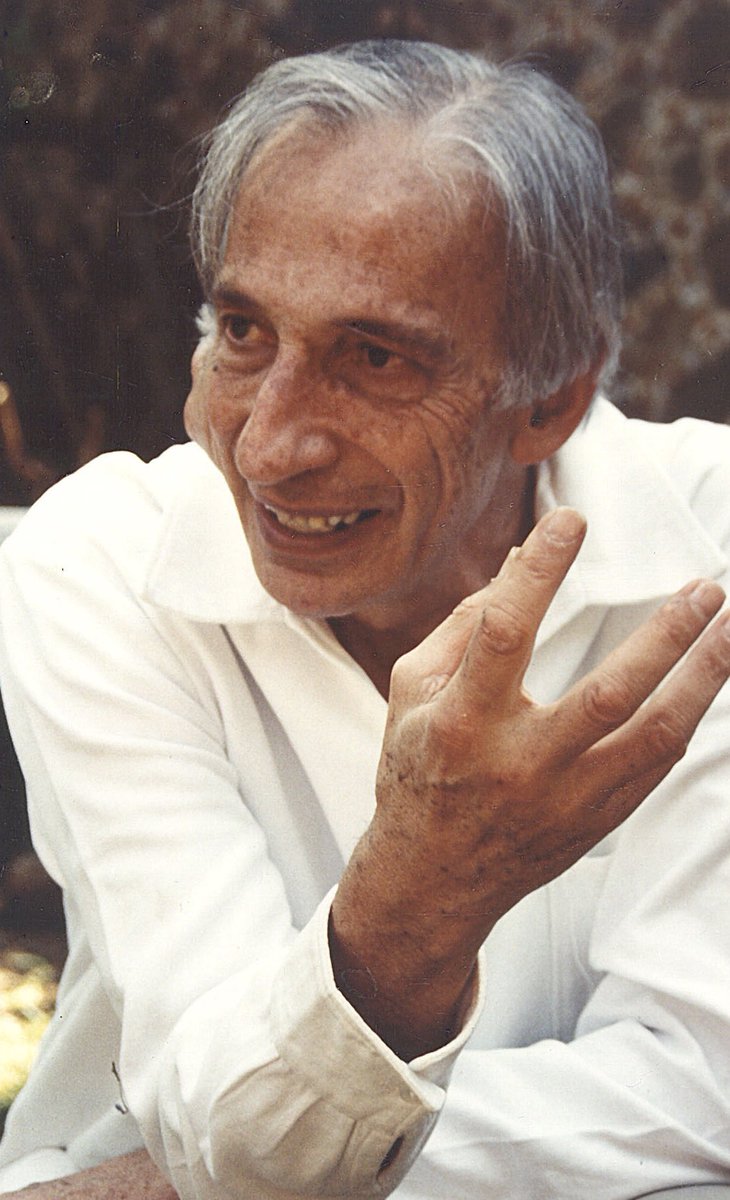
Image description
Original X alt text
Portrait of Ivan Illich
@CACRadicalGrace @UniteThePoor Moltmann: "Judgment is not the last thing of all. What is last and final is the new word of creation: ‘Behold, I make all things new’ (Rev. 21.5).”