
Nick Routledge@nick_routledge

Ahead of the dominant sound bite, experience affirms that where centralized, transactional, top-down approaches are poorly positioned to address the ecological and social disarray of our times, in contrast, localized, participatory approaches are proving highly effective.
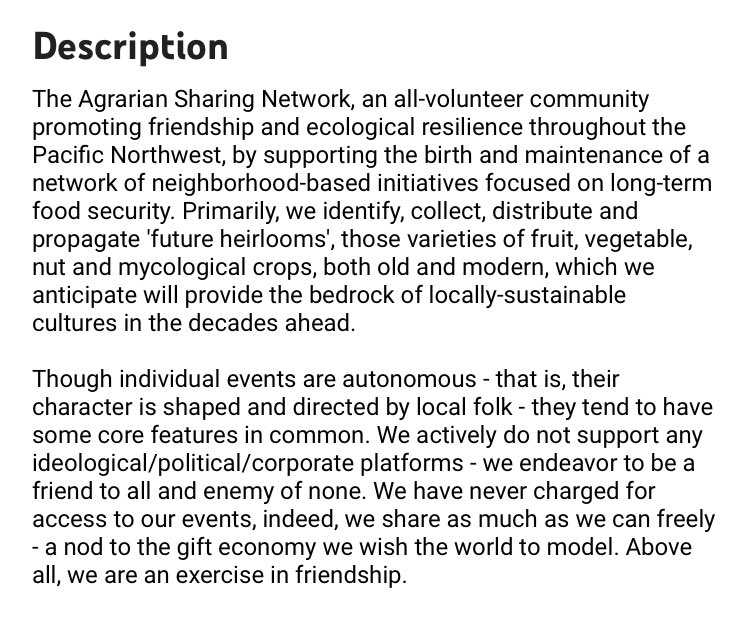
Image attached to this archived post

Quoted or linked post

Nick Routledge@nick_routledge · 12 Jan 2022

@GMWatch Bizarre, the almost universal failure to notice, but hybrid varieties of food crops (the majority of for-profit cultivars) are engineered _by_design_ to lack the inherent capacity to co-evolve. Simply put, at a fundamental genomic level, such seed cannot adapt to climate chaos.

View this post’s context →

Context in the archive

Quoted byRT @AgrarianSharing: That's transplants for the last three of our B. oleraceae/napus seed increases out the door, headed towards friendly ground in the north, making a total of 16 Brassica growouts at scale, on the go; with a small number of 'less-regulated', experimental grexes placed into suburbs.Quoted byRT @AgrarianSharing: That's transplants for the last three of our B. oleraceae/napus seed increases out the door, headed towards friendly ground in the north, making a total of 16 Brassica growouts at scale, on the go; with a small number of 'less-regulated', experimental grexes placed into suburbs.Quoted byThat's transplants for the last three of our B. oleraceae/napus seed increases out the door, headed towards friendly ground in the north, making a total of 16 Brassica growouts at scale, on the go; with a small number of 'less-regulated', experimental grexes placed into suburbs.Quoted by4/ One of the superpowers of hybrid seed? A perfect industrial match. Notice all our supermarket cabbages very solid and same these days? They’re bred that way. For machine harvest. Alas. Global seed and food systems, expressly engineered not to naturalize to changing times.