
Nick Routledge@nick_routledge
Reply

@charlesdowding Charles, I greenhouse winter-crop in conditions much akin to yours, but almost completely eschew lettuce for its disease-susceptibility and space-needs relative to other crop types. A few Europeans (arugula, chicories etc.) but a big focus, under cover, on densely-planted Asians.

Quoted or linked post

Nick Routledge@nick_routledge · 26 Dec 2021

1/ Resilient local. If a picture could paint a thousand RTs. Brushing snow off the winter greenhouse this morn, I poked my head through the door, for a planetary vision. My style of winter-cropping? An emergent property of thriveability & survivability. Syncretic complementarian. x.com/covidyoga/status/1475159733157855234
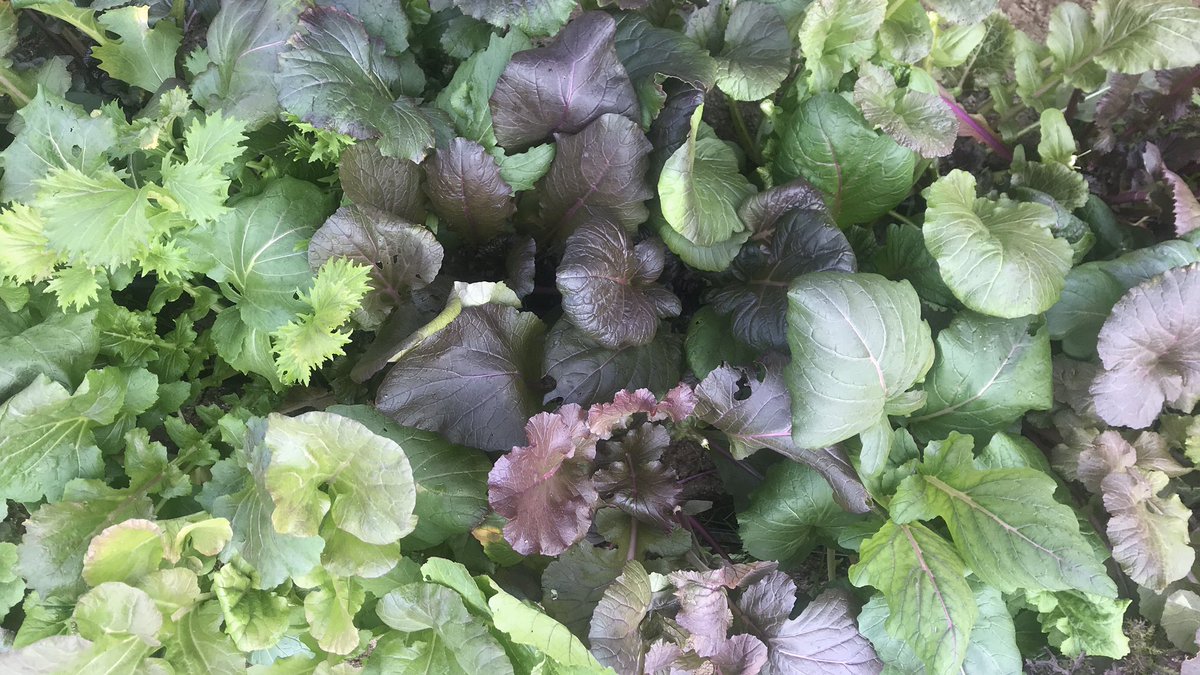
Image attached to this archived post
View this post’s context →

Context in the archive

Quoted byRT @nick_routledge: @cognazor I field crop extensively year-round, but greenhouses powerfully redefine my capacity to raise diverse crops, well. I recommend PNW homesteaders invest early in a hoop house. It's an ROI that transforms lives. If you're going to use oil, use it, sensibly, for greenhouse plastic.Quoted by@cognazor I field crop extensively year-round, but greenhouses powerfully redefine my capacity to raise diverse crops, well. I recommend PNW homesteaders invest early in a hoop house. It's an ROI that transforms lives. If you're going to use oil, use it, sensibly, for greenhouse plastic.Quoted by@Kuwadanouen 2/ Experience suggests Asian pears are reliably the most productive fruit-trees we grow in Oregon, even as they remain a minority crop for us. That said, wherever we farm vegetables in greenhouses through winters, East Asian crops comprehensively dominate production as a whole.Quoted by@kristinohlson @Tao_Orion A big focus on Asian greens in the winter greenhouses. Notably, they are very well suited to both salads *and* stir-frying. The latter trait especially useful when trying to get them into Asian-green or salad-averse folk, in community pantries supporting poor folk, for example.